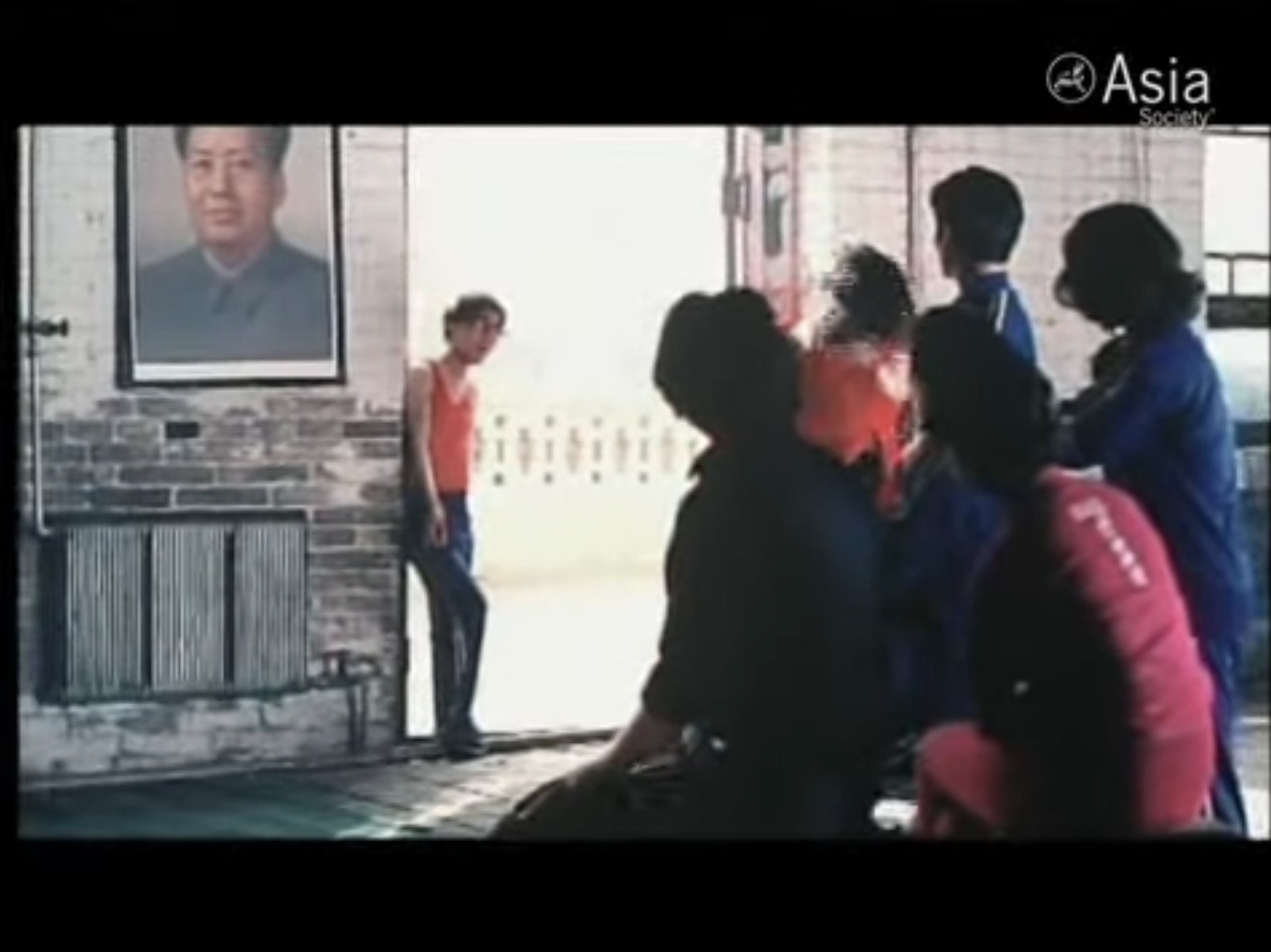
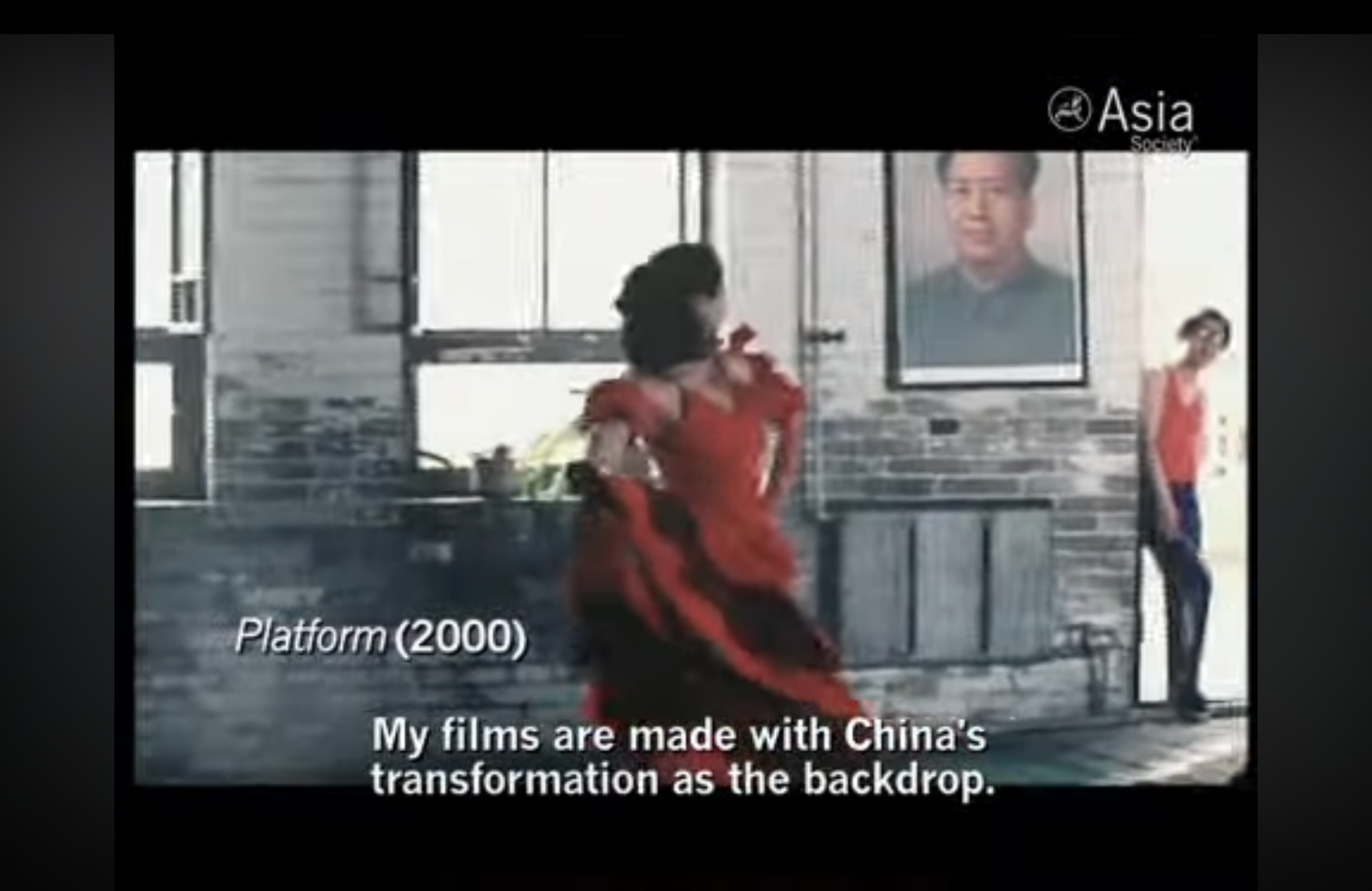
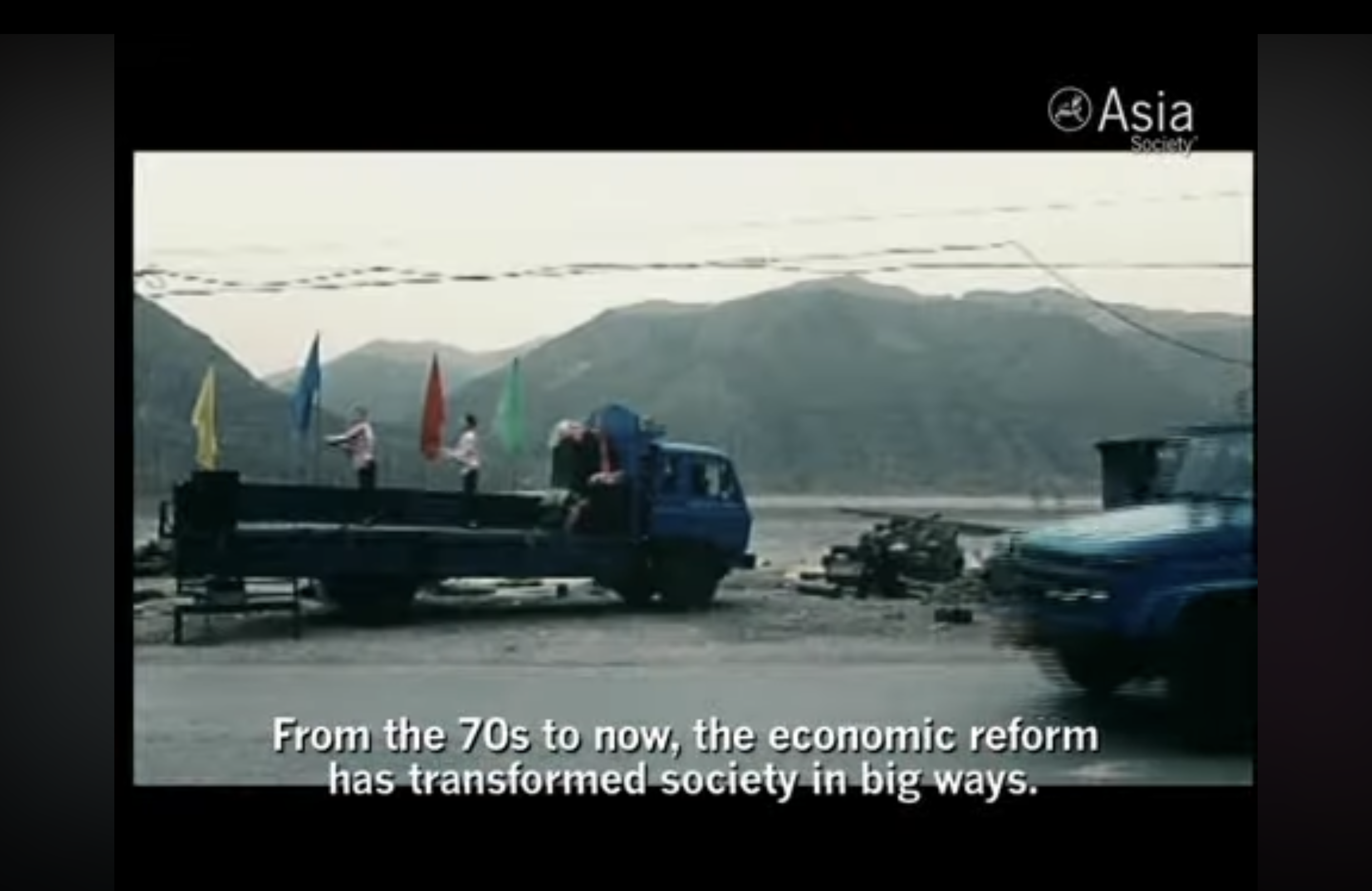
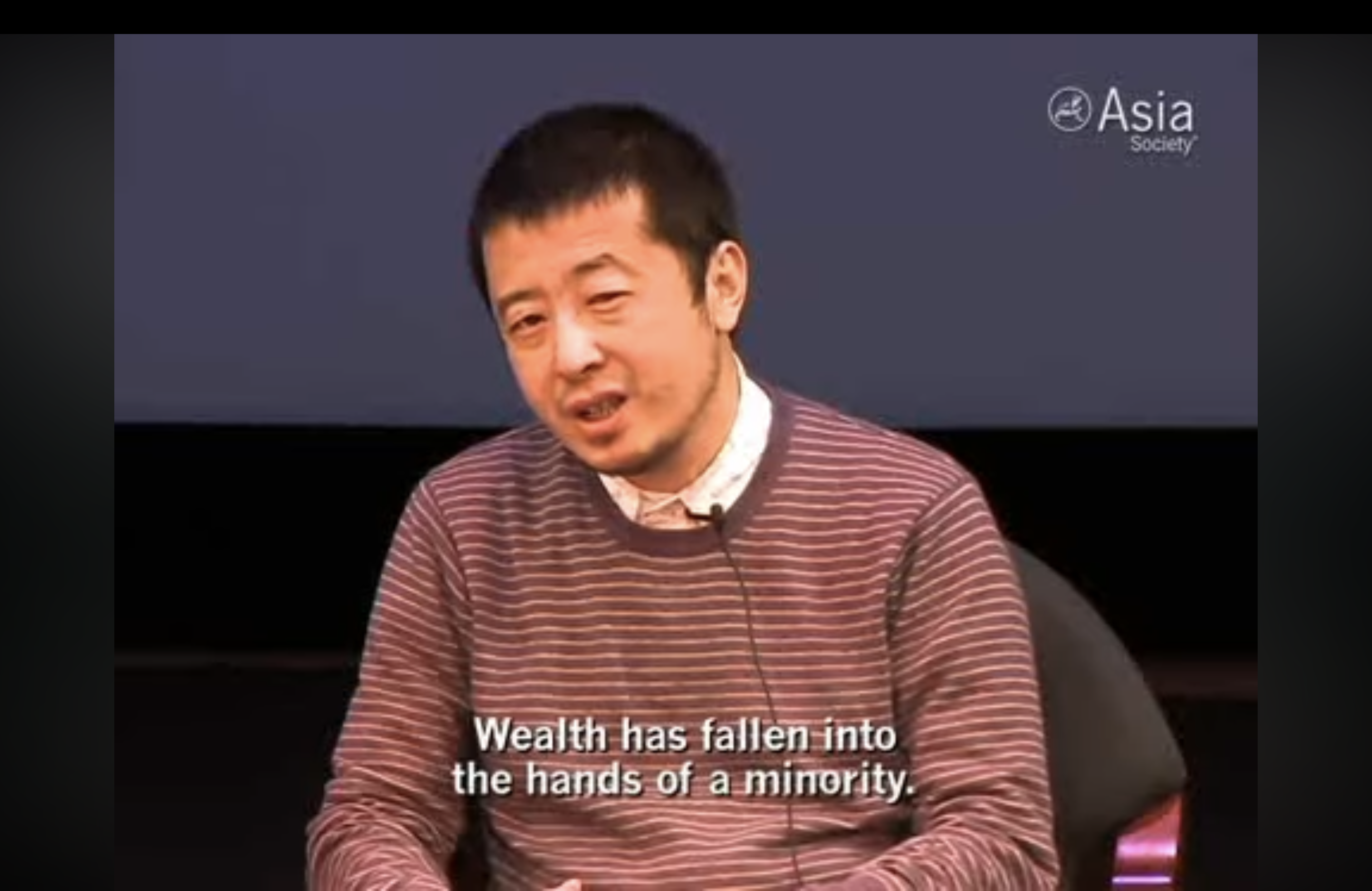
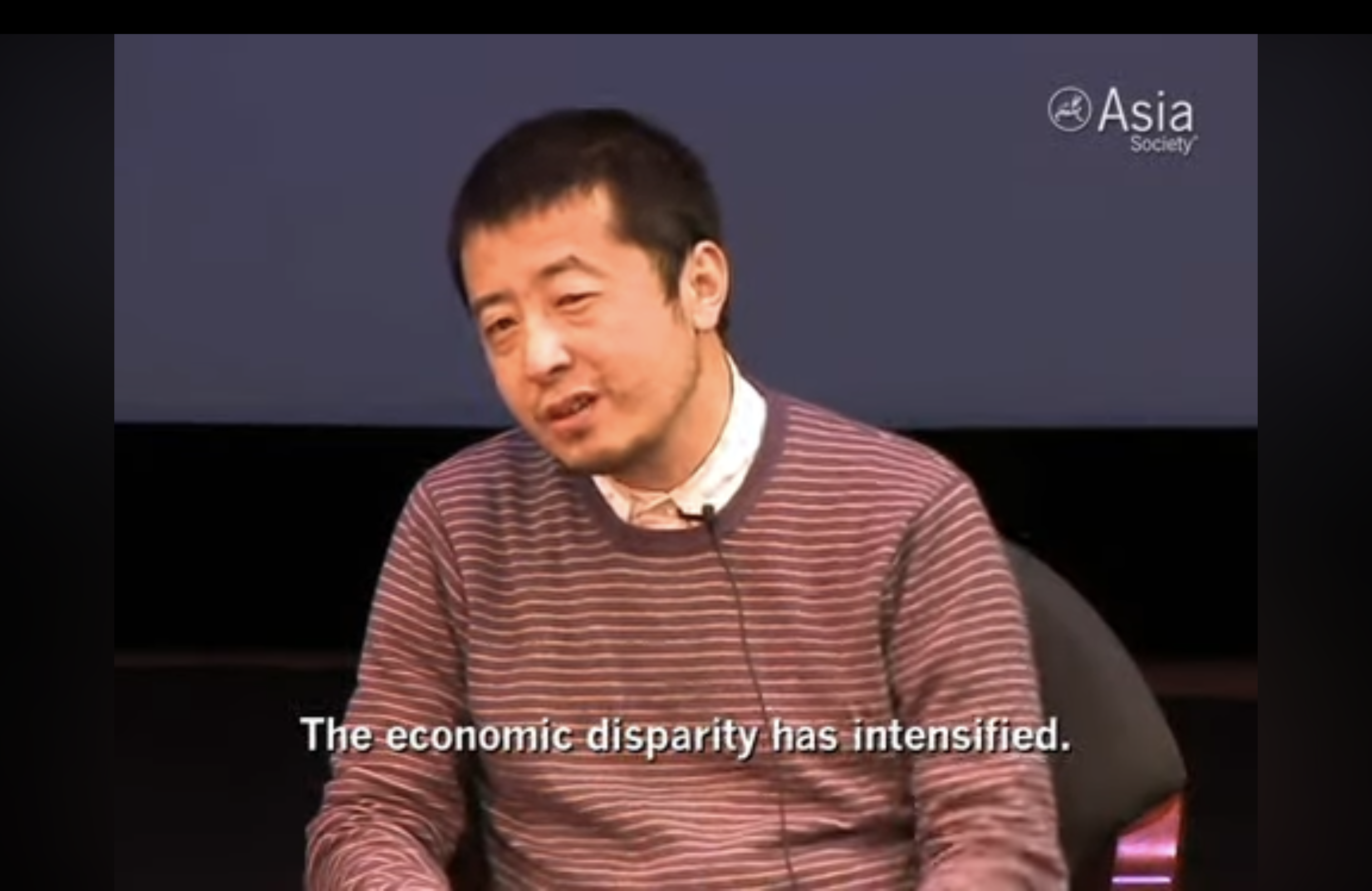
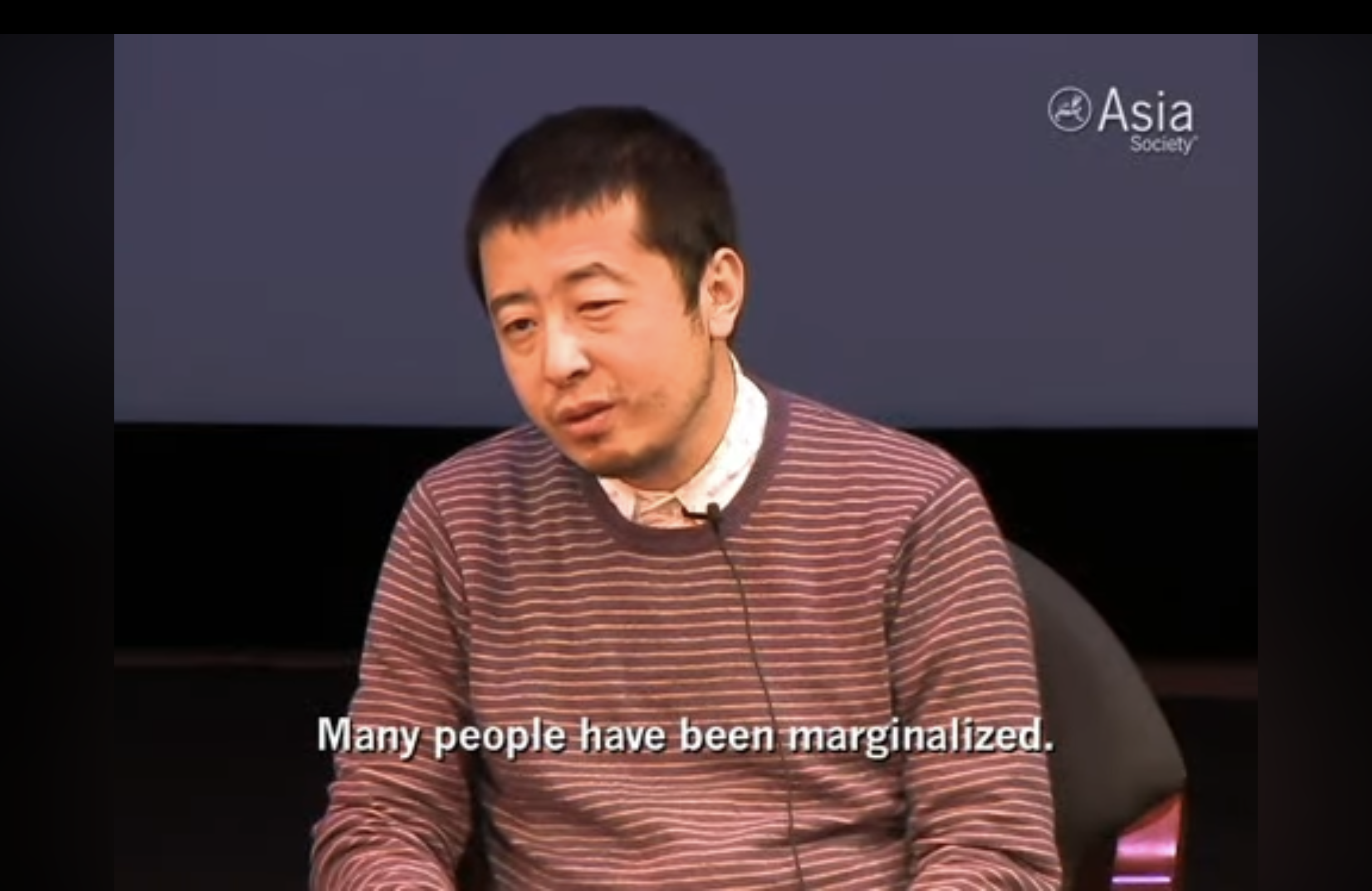
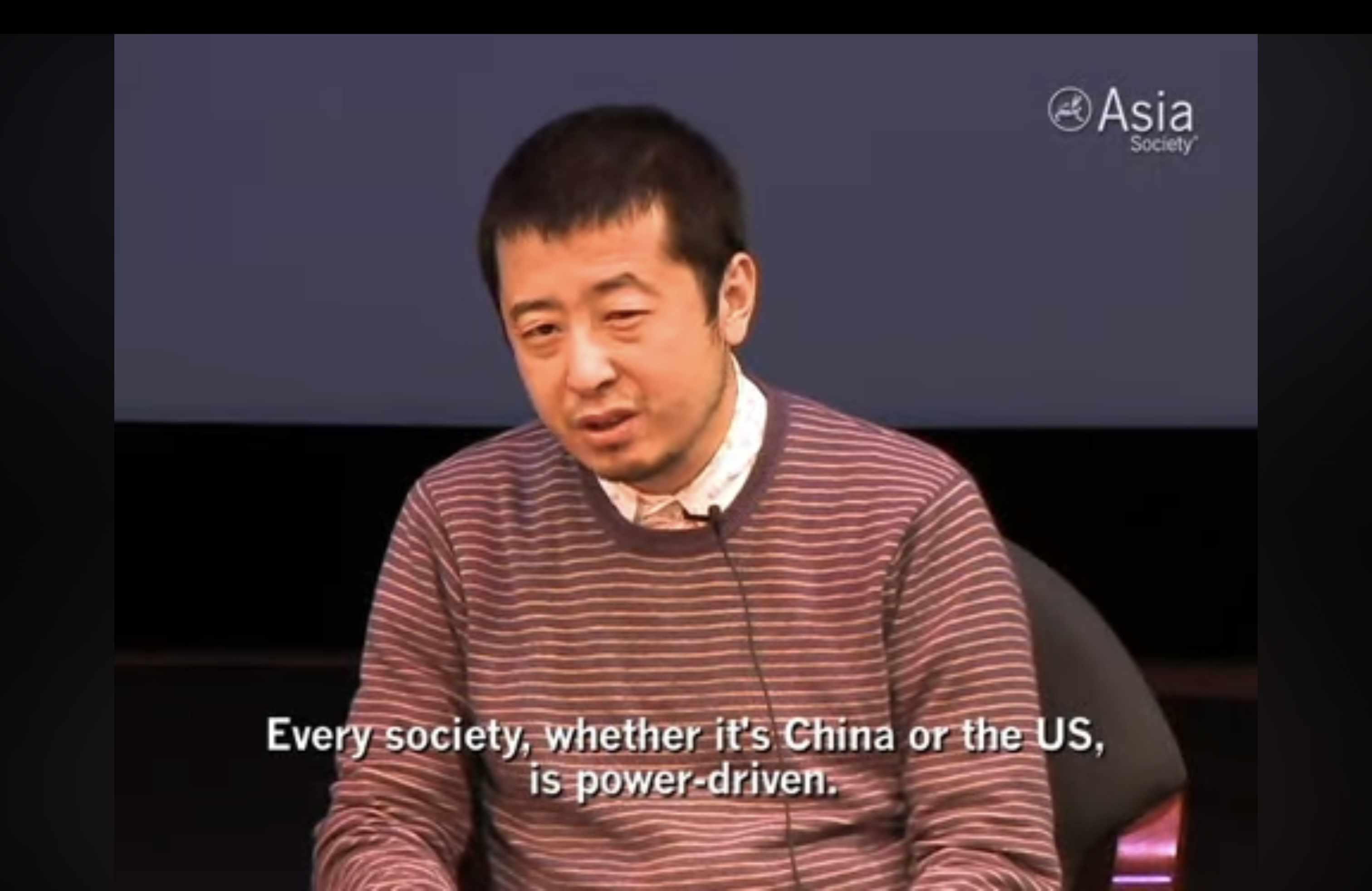
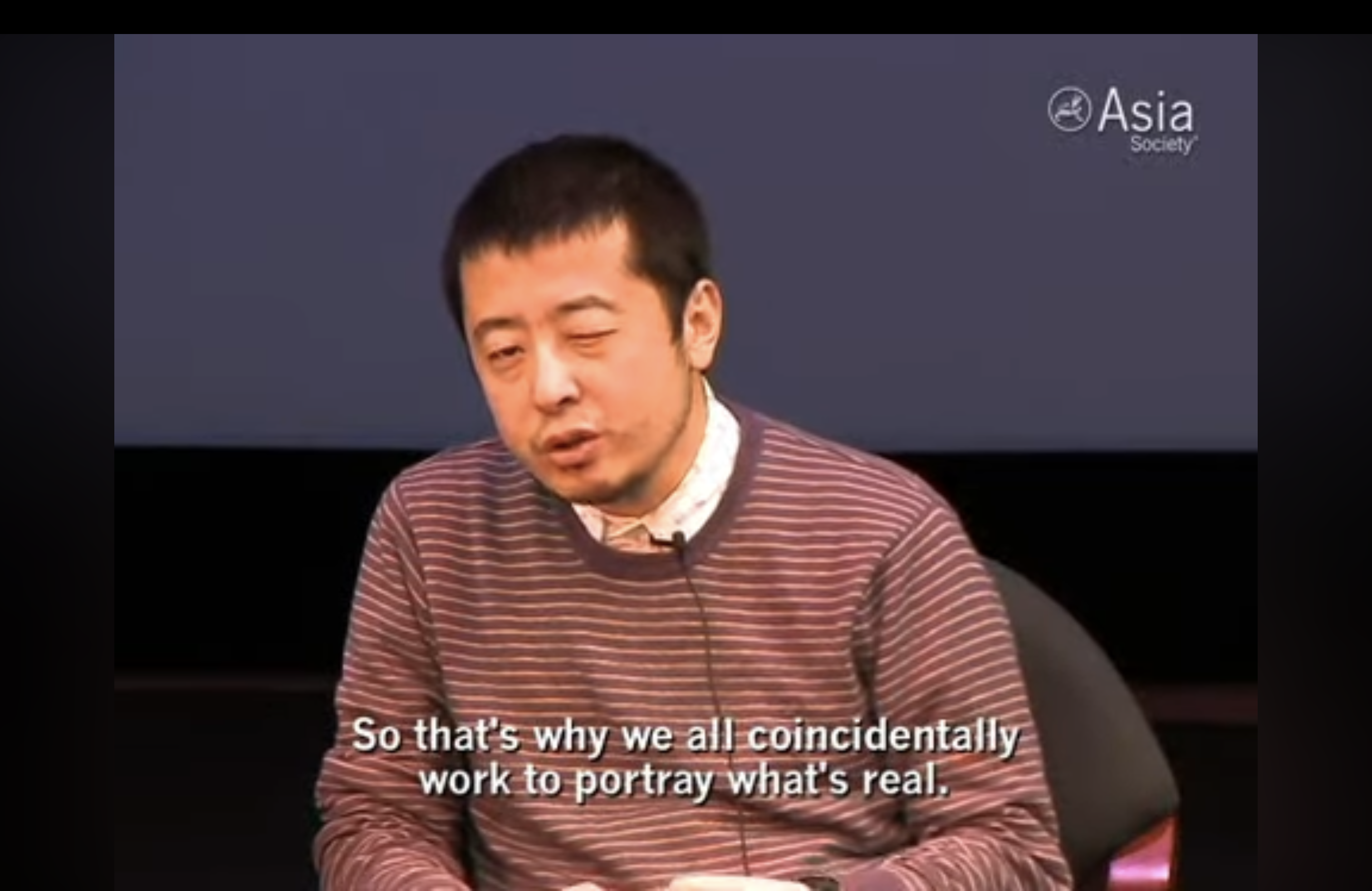
Screenshots from Filmmaker Jia Zhangke on the Realist Imperative (at Asia Society)
Contents:
The Chinese Movie:
Conceptually, as a working title, it is The Chinese Movie because that is what I've talked about it as.
Another working title for it is Polly Wood; the Are.na dossier with its accompanying research is titled this.
It seems like it will have some amount of funding. I'm still only able to create in accordance to conditions.
This could be an opportunity to change that, but have to see where things go.
I have settled on what I want though, which is to aspire to convert the money that funds the film into capital, ideally through a return on investment.
Conversion could be another working title. I played with this thought today; I liked the religious overtones. I am well aware of the importance of naming. It is important to me that this project and this film has a strong name.
I would like for this film to be a feature length film. It will be on the shorter end of a feature, but it's important for it to be a feature, especially as it pertains to ROI and what becomes possible with that length.
It also must have a certain visual quality to meet the standards of commerciality. I will be able to achieve this working with M and H.
It must also have a certain aural quality to meet the standardsof commerciality. There are a few people I will be able to achieve this with. Things will work out naturally.
I could also work with C on practical effects and camera movement technologies. There are plenty of people who will want to act. I can also find additional actors.
This morning I had the thought of shooting in a quarry. I would reach out and offer M and H's services in making video documentary content for the quarrying businesses at a discounted rate in exchange for permission to shoot on location. There are beautiful marble quarries in Vermont that I believe would make for strong locations.
As far as the major elements, I am thinking of location, of the actors as Bressonian(-esque) models, and of the narrative. Despite this being The Chinese Movie, I'm not sure if I want to move forward with the translation-and-subtitle approach. Although now I've seen it done via O's film, and there is something to the distancing achieved that I like, and something further I think I could add to it via my 'Identity Politics' play.
In the theater today I thought of Farocki's failed film noir. Betrogen or Betrayed; I could rework it. Similar to The Pig Trade. And then I thought of Youngboy rapping I cut off my day 1s for the win and thought of my childhood friends, my distance from them at that time, their absence from my life now. The lack of common ground.
I have been trying to ground myself. I felt grounded today and despite the use I still feel grounded now. Despite the circumstances, I feel capable and within myself. I feel myself regaining control and power.
I am starting to work towards a methodology to discover what this film will be. I am going back to how I learned how to make my first (festival) film; the importance of writing a treatment, of making a plan, even though I know that things will change.
As such, I want to begin by printing. I have a printer and I have paper. I can turn my notes into pages, physical pages, like my old collages, but also like Costa's notebooks for Casa de Lava. It seems vital, essential to generate ideas in this way, and then to adapt them into something else.
Before I wanted to write a novel to turn into this film, but now I wonder if that novel is truly necessary. Or if this collection of texts and images, collaged in relation to one another can constitute this novel, such that I adapt it into a script.
In this case, does this change the nature of the book that S wanted to publish, that I have avoided the next steps towards seeing through, as I question what such a publication would accomplish?
Accomplishment, success, failure. These words are necessarily vague. I am set on my goal for what I would like this film to do, which is the same goal as Farocki's with Betrayed. I find humor in this gambit.
In the car, K asked what kind of film it would be and I said something between a film noir and a western. It is essential to me that there is a criminal component to the film. That one of its major themes is crime and another is conspiracy.
I remember the relationship between conspiracy and my own life, my will to live, to work, to produce. The way in which I need mystery, wonder, enchantment in order to live — how conspiracy can be a means to realize these things.
Which goes back to Rivette: theater as conspiracy. The etymological move: Conspirare combines con- ("together") with spirare ("to breathe"). In ancient Rome, it originally described harmony, unison, or people acting in close, shared agreement. Words written by a machine.
The knowledge that there was a perversion of conspiracy towards evil. The idea of a harmonious conspiracy; a flicker of thought towards Berardi's Breathing.
A summary:
A film about crime and conspiracy and translation, produced by specific financial conditions, with an aspiration towards standards that would produce a positive return on investment.
Besides ROI, I want this film to achieve a level of rigor in relation to the major themes/interests I maintain in my work. The list I wrote out by hand: Archive, Addiction, The World, Cartography, Journets, The I, persisting, (il)legibility, Materials, Extraction.
It also goes back to a conversation I had with H on the roof of where O and M used to live. About when a work does something, not needing context, grounding, but when it is alive and attacks and infects its viewers. I forget the language we used. I'm sure I wrote it out somewhere.
All of this does feel possible and within myself. If anything, I feel like I am the only person who can accomplish these things.
I remember and will continue to remind myself of the importance of grounding and discipline in order to realize this project as it should be realized.
I am aware that I am about to dedicate my life to something larger than myself once again. I am preparing for this plunge; I feel ready.
I am still in the process of asking myself what type of film should this be.
I talked about it more with I yesterday. I was in pain because of my decisions. This pain has bled into today, reminding me of the discipline I must maintain if I want to see this through to success.
There is the matter of time. What can be compressed, what is rushing, what is the right speed to move at. The typewriter applied to life.
There is the matter of the starting point. The occasion, but where one takes the occasion.
There is the model I've developed so far, and where such a model can go.
This model is predicated on constraints. I figure out what I have to work with and then work from there. I talked with I about breaking from this model.
This model was focused on distribution and not production. The occasion was one of distribution and not production. Here the occasion is production; the distribution would be aspirational, it would have goals. In a way, it is a reversal of my usual way of working.
The summary of Betrogen on Farocki's website reads:
A "film-noir" on double identity and role reversal. A man is looking for a woman to love. He finds her in a seedy bar and persuades her to marry him. The day she decides to flee... he kills her. To ward off suspicion, he moves in with the sister of the deceased. Nobody notices the substitution, that his wife is now another. How easy to go from one love to another... But a friend of the dead woman starts asking questions. For filmgoers captivated by images and mannerisms, Harun Farocki's unique approach to cinematic art deserves to be better known.
From Nora Alter's Harun Farocki: Forms of Intelligence:
Betrayed is about mimicry, acting, and simulation. All the agents in the film are engaged in forms of performance and role-playing. Their interactions are part of an intricate game that revolves around capital and commodity exchange. If Edith wants financial security for herself and her children, she must adopt a new role and adhere to certain conventions and guidelines. The same bourgeois contract was offered to Anna, who refused to play by the rules. An early exchange between Jens and Anna reveals her self-awareness as a commodity. Jens, like a spectator or voyeur, comes to watch Anna every night. Finally, she sits down to talk to him, but first demands that he buy her a drink since "that is what is done if one wants a woman's attention." Jens criticizes this ritual, and they have the following exchange regarding payment for a woman's time and attention: Jens sanctimoniously declares, "I find whores more honest. Here the girls act as if men had a chance; they act as if they are really in love with men," to which Anna retorts, "Men know that women will pretend to be in love with them when they spend money on them. That is what they pay for. One also goes to the movies though one knows that the actors don't really die." In other words, we willingly pay for our illusions to be upheld. For Anna, Jens, and Edith, their livelihood depends on the successful performance of their roles, just like in a film. Games and role-playing are integral features in Farocki's oeuvre, extending from prominent works such as Serious Games (2009-2010), Deep Play (2007), and How to Live in the FRG (1990) to the children's games of Bedtime Stories (1977-1978). In his autobiography, Farocki remembers significant moments in cinema and their impact on his way of being. For example, in his early twenties, he recalls seeing Paul Newman in the role of Eddie in The Hustler (1961) and observes: "His false play consisted in showing them that he belonged to them. Also I participated in a false play and paid close attention to see that the others also played by the rules."
In addition to Brecht, another important influence at the time on Farocki was Bresson. Immediately prior to making Betrayed, Farocki been deeply immersed in researching the films of Bresson both for a television broadcast, "L'Argent" by Bresson, and for a special issue of Filmkritik devoted to the French director. In his contribution to that volume, "Bresson ein Stilist" (Bresson a Stylist, 1984), Farocki singles out several characteristics that distinguish the director. First, he notes that "Bresson never uses long shots, and never provides an overview of the entirety before focusing in on a small detail". And in Betrayed, Farocki too eschews establishing shots or compositions that would provide a totalizing view. The film begins with a disorienting over-the-shoulder shot of Eddi arranging cigarettes and flowers, followed by a cut to part of Jens's light-blue car with partially obscured words printed on it, followed by a cut to the bar, in which Anna is first presented from the back, her face reflected, but barely discernible, in a mirror. After this rapid series of shots, the camera tracks back, and a greater depth of the sequence is provided. The reveal is slow, like the erotic stripteases performed in various clubs in Hamburg's Reeperband where Betrayed is set. Bresson's second stylistic tendency that impresses Farocki is the French director's way of "tight cutting," quick shots containing a sparse cinematography, that further pronounces the fact that the totality is assembled out of shards and fragments. Farocki's editing style is commented on by reviewers both positively and negatively. As Katrin Müller recognizes, "In the interface between shots, the blind spots of perception, the truth lurks." In his essay, Farocki also notes that for Bresson, one of the most critical exchanges is in the look. Betrayed is replete with long shots of the characters gazing at each other or gazing into an off-screen space, their eyes unblinking. Jens watches Anna; Anna watches Jens watching her; their dialogue is punctuated by long periods of silence in which the camera focuses on eyes that gaze offscreen.
Finally, Farocki remarks that Bresson's films are replete with figures on society's margins who don't fit in. Anna is an outsider who cannot conform to bourgeois life and considers Jens's apartment a prison. She frequently runs away and is most at "home" with other transients in bars and nightclubs. In the penultimate sequence of Betrayed, a former male lover of Anna's encounters Edith, in the guise of Anna, and Jens in the bar where Anna used to perform. He immediately detects that something is out of place because she looks like "a housewife playing at being a whore." He condemns her for selling out and adopting a bourgeois lifestyle and reminds her of a blood pact that the two had made earlier to save each other if either became middle class.
In Betrayed, as with Newman's character, role-playing and acting have become a profession. For Anna, Jens, and Edith, their livelihoods and that of all hustlers depend on the clientele's successful deception. To that extent, they are no longer, according to game theoretician Roger Caillois, players but rather workers. Mimicry is instrumentalized. And yet, Farocki underscores, in a Lacanian gesture, desire is produced in the consumer of the game even as they are aware of being taken. It becomes like going to a film - the grandest of illusions. Through his memories of Newman and his navigation of everyday life in Betrayed, Farocki underscores parallels between filmmaking and game-playing. Cinema is about the successful mastery of creating different imaginary worlds in which the spectator momentarily loses themselves despite the knowledge that the world on screen is not real: Je sais bien, mais quand même.... (I know very well, but nevertheless....) In an explicit nod to Lacan, Farocki demonstrates that Jens, by violating the implicit rules and conventions of fantasy through his attempt to possess his fetishistic object of desire, is doomed to failure. In Betrayed, human relations are harshly reduced to economic transactions where both parties know the value of the negotiated "goods." One has to pay to play the game.
The story of Jens and Anna is thus transformed into a metaphor for cinema and a metonym for life more generally. Such self-reflexivity is not new in film and abounds, for example, in classic films by Jean Renoir and Orson Welles. Still, the question remains, what accounted for Betrayed's failure at the box office? The narrative was compelling, but how it was told - its form was decried as being too "avantgarde." As one critic laments: "The artificiality is intentional," while another charges that "Farocki's characters are so artificial to the extent that their dialogue is ready to be printed thereby diminishing any interest in either them or the newspaper article from which their story was taken." Specifically, critics were responding to a stylized form of acting and the distanciation effect that Farocki had developed from Brecht. The actors act in a way that reflects on itself and draws attention to the fact that they are playing roles that have been crafted for them by society. Such a method is intended to break the fourth wall with the audience and to produce a new state of social awareness. However, in the case of Betrayed, the reception to the actors' performances was roundly condemning, speaking of "abysses that open up with every word. The unspeakable hides behind the banality. The actors themselves don't believe the lines they deliver."
Farocki focuses on examples in film and literature in which one woman replaces another, and the substitution goes undetected. He begins with Agnés Varda's Le Bonheur (Happiness, 1965): "In the story of Happiness a woman is substituted for another, and the exchange goes without a hitch. A story is rarely told, about the substitution of a woman, in which the exchange doesn't work." He discusses thematically similar films and novels ranging from François Truffaut's Mississippi Mermaid (1969) to William Irish's I Married a Dead Man (1948). Farocki concludes by citing a newspaper article about a British soldier in Singapore who killed his wife and replaced her with her sister. The sister successfully takes on the identity of her murdered sibling; however, she has four children whom she must now adopt as if she were the soldier's spouse surviving the death of her sister. It all goes according to plan. Here we find the germ of Farocki's Betrayed. As he recalls, "I carried this newspaper clipping around with me for a long time. The paper has become yellowed and wrinkled over time." Farocki explains the recourse to a newspaper or factual story for inspiration in the following: "Poe wrote stories in such a way that life is only communicated by the metaphors that are contained within them. That is the beauty of newspaper stories too." For Farocki, the stripped-down or "operational" language of factual reporting may be read simultaneously as a metaphor that symbolically points to something else. In this instance, through an exchange of identity, performance and appearance become the reality. He concludes, "An exchange is also a ghost-one existence takes over another. There is an arrangement behind this, that is the rule of the game. So that the process of illusion-disillusionment is not empty, the illusion must establish and assert its own reality. The exchange is a powerful metaphor. That one person can step into the outline of another and has to live something out of the life of the other: that is too good an idea to easily become a good story." (It is interesting to note that Farocki never mentions Daniel Vigne's immensely successful Le Retour de Martin Guerre (The Return of Martin Guerre, 1982) that centers on the return of a soldier from war who takes on another's identity.)
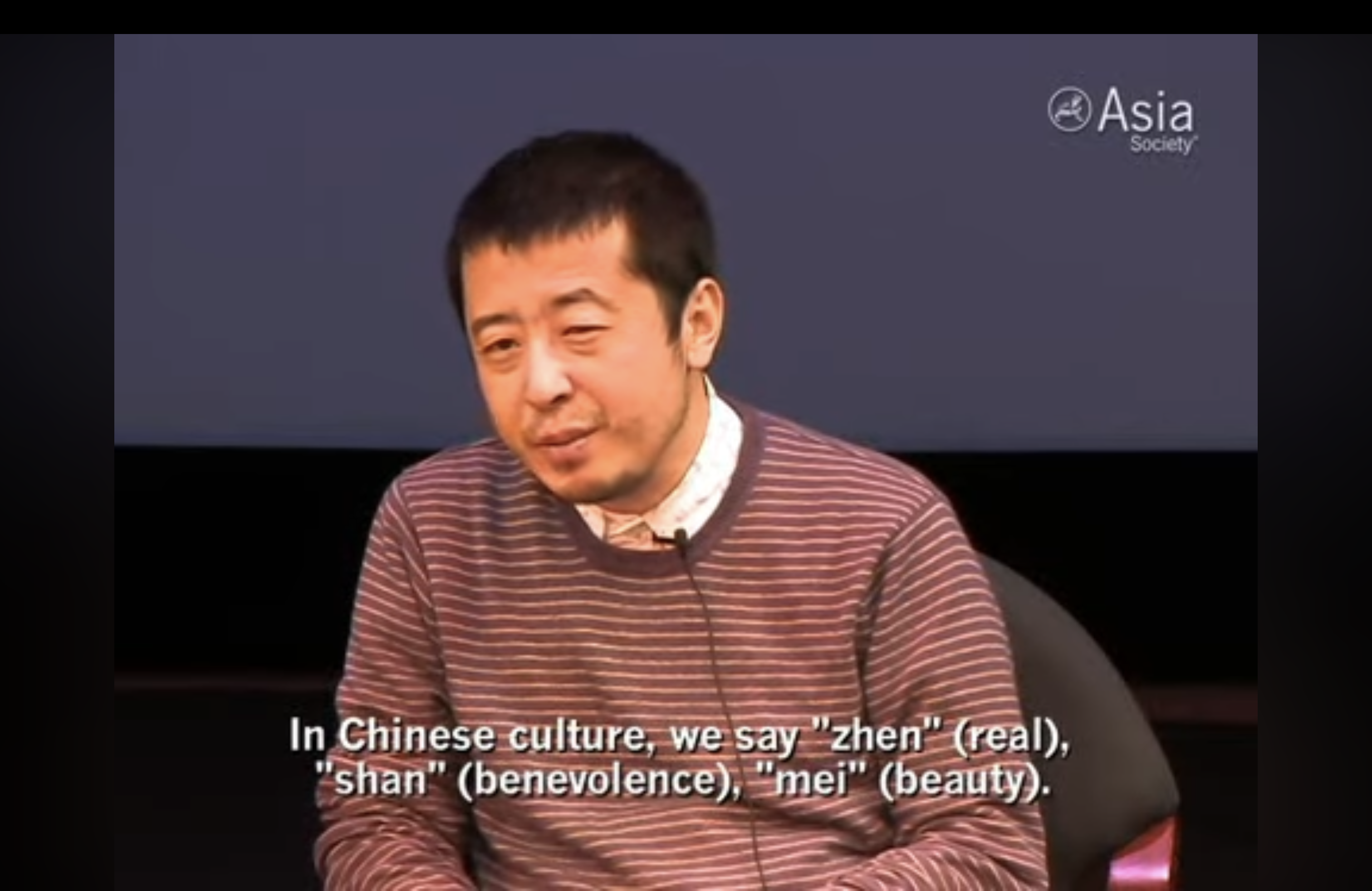
Screenshots from Filmmaker Jia Zhangke on the Realist Imperative (at Asia Society)
Jia Zhangke on the Realist Imperative (cont.)
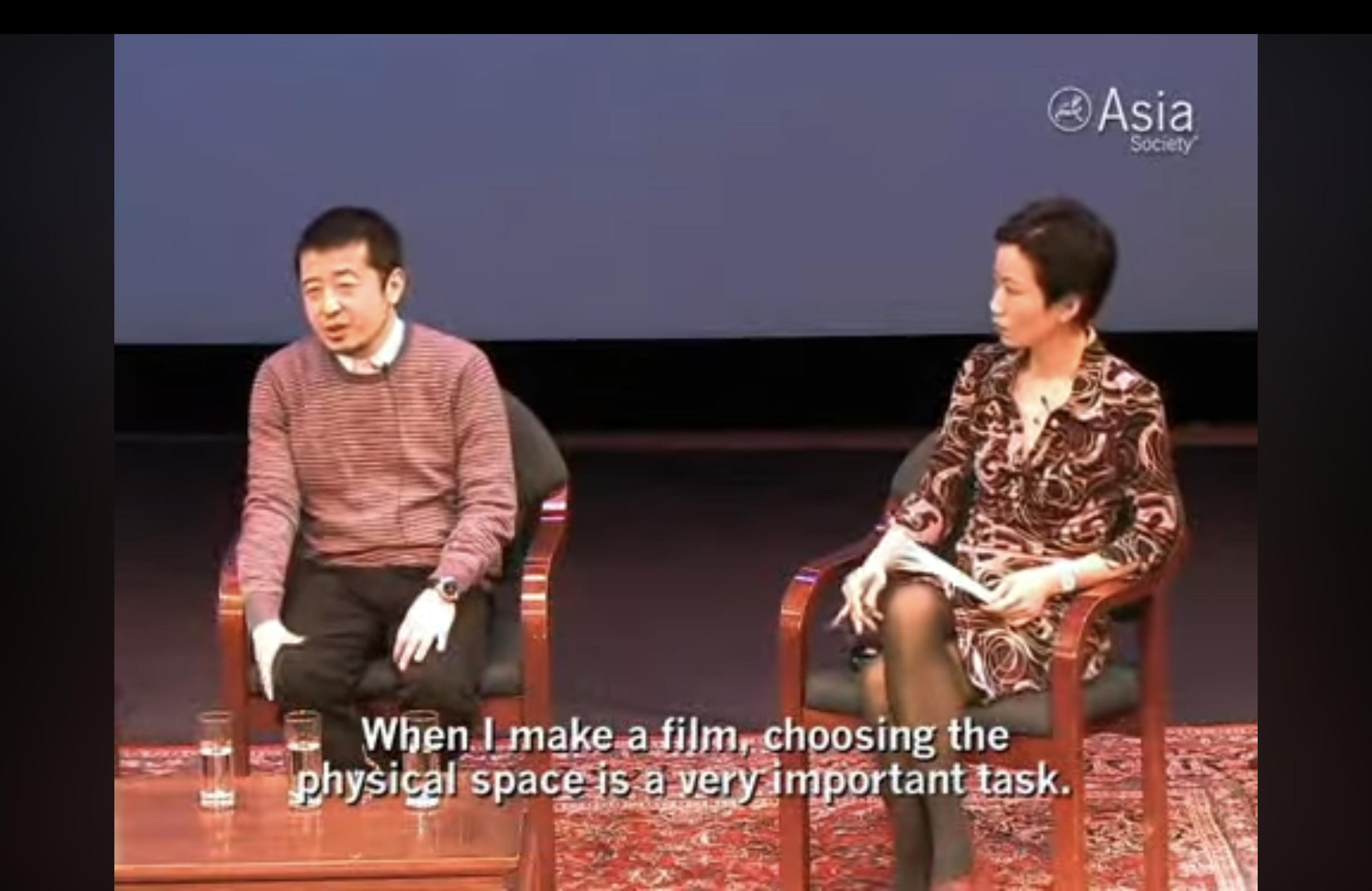
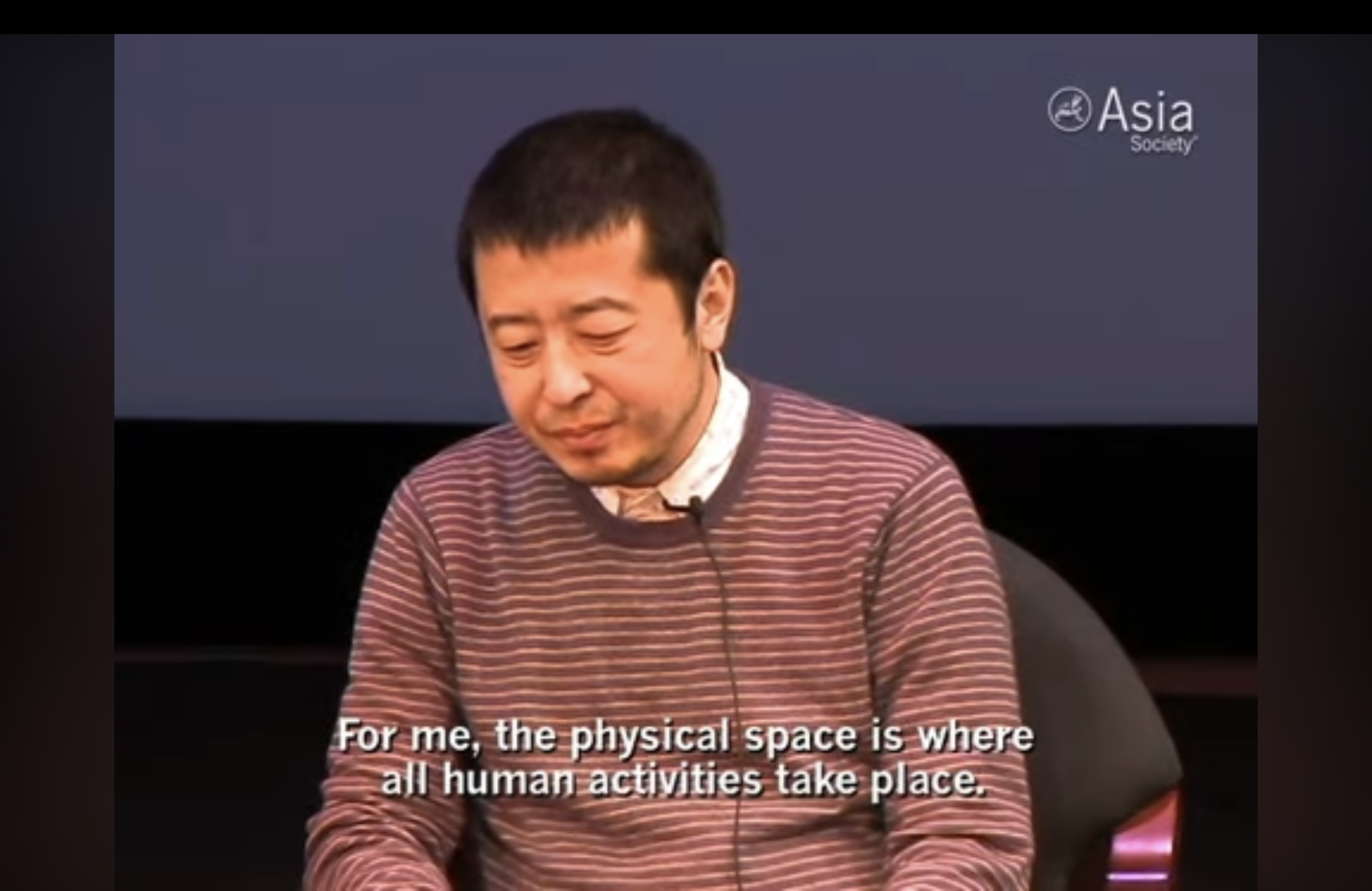
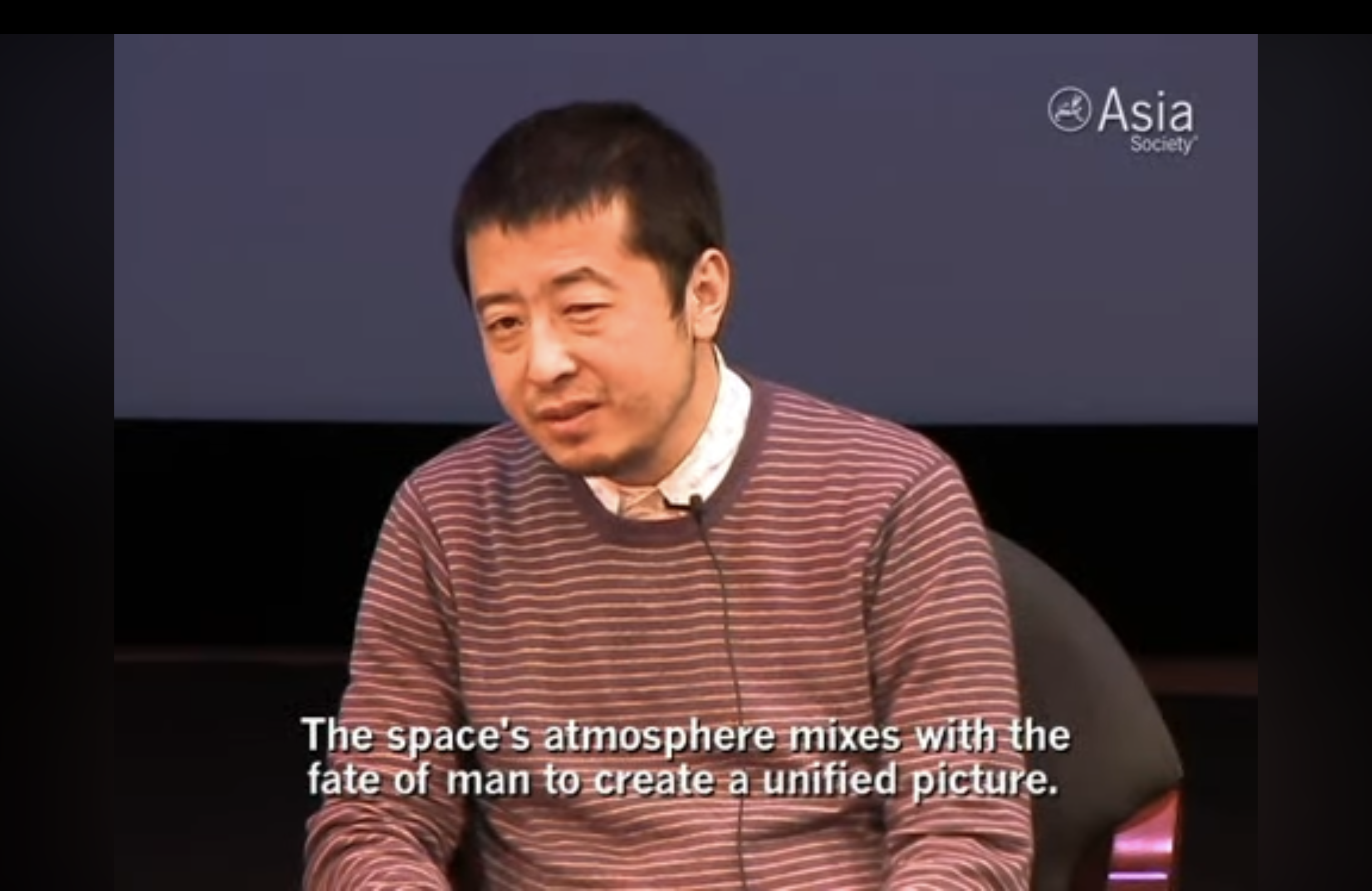
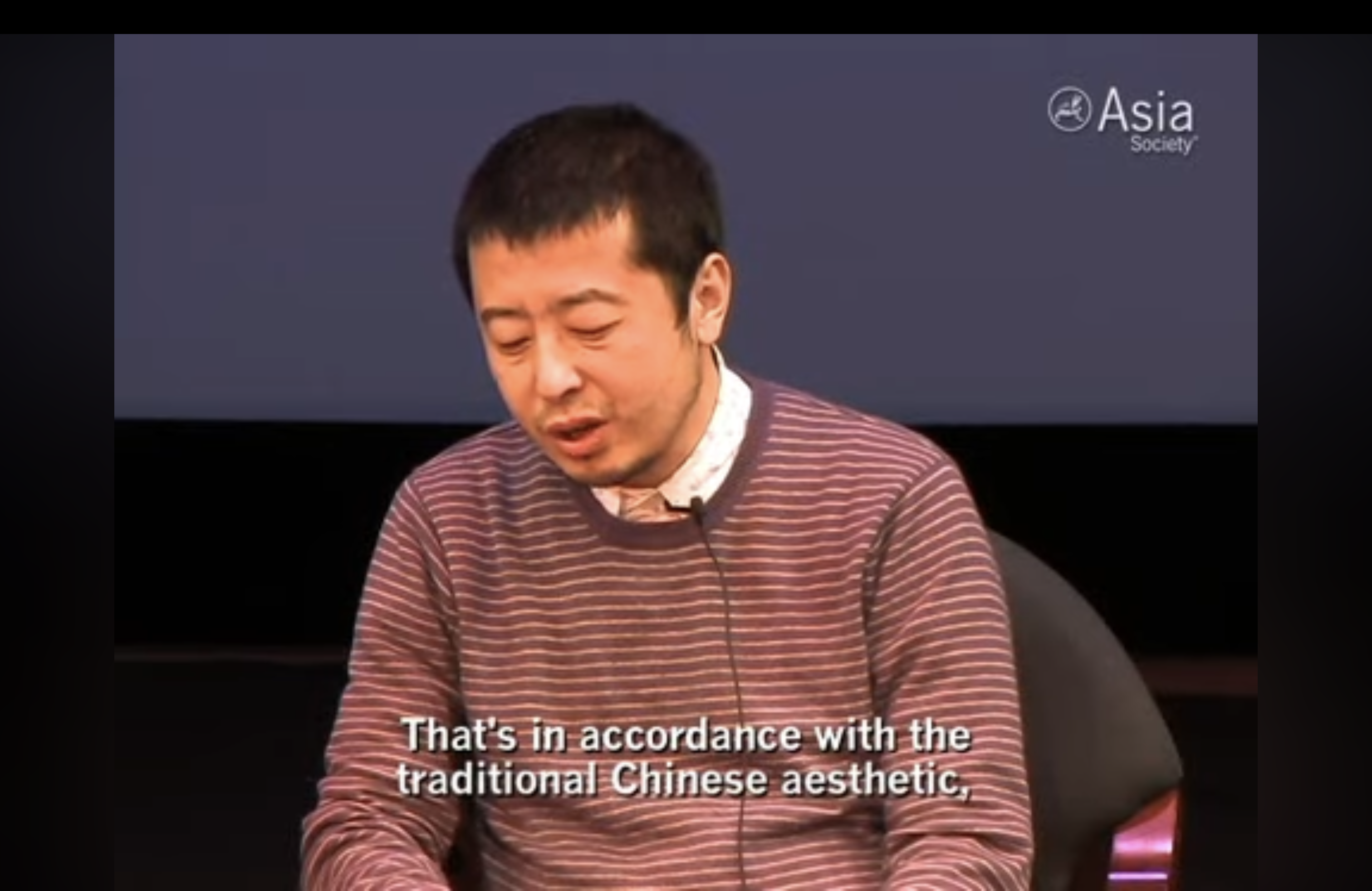
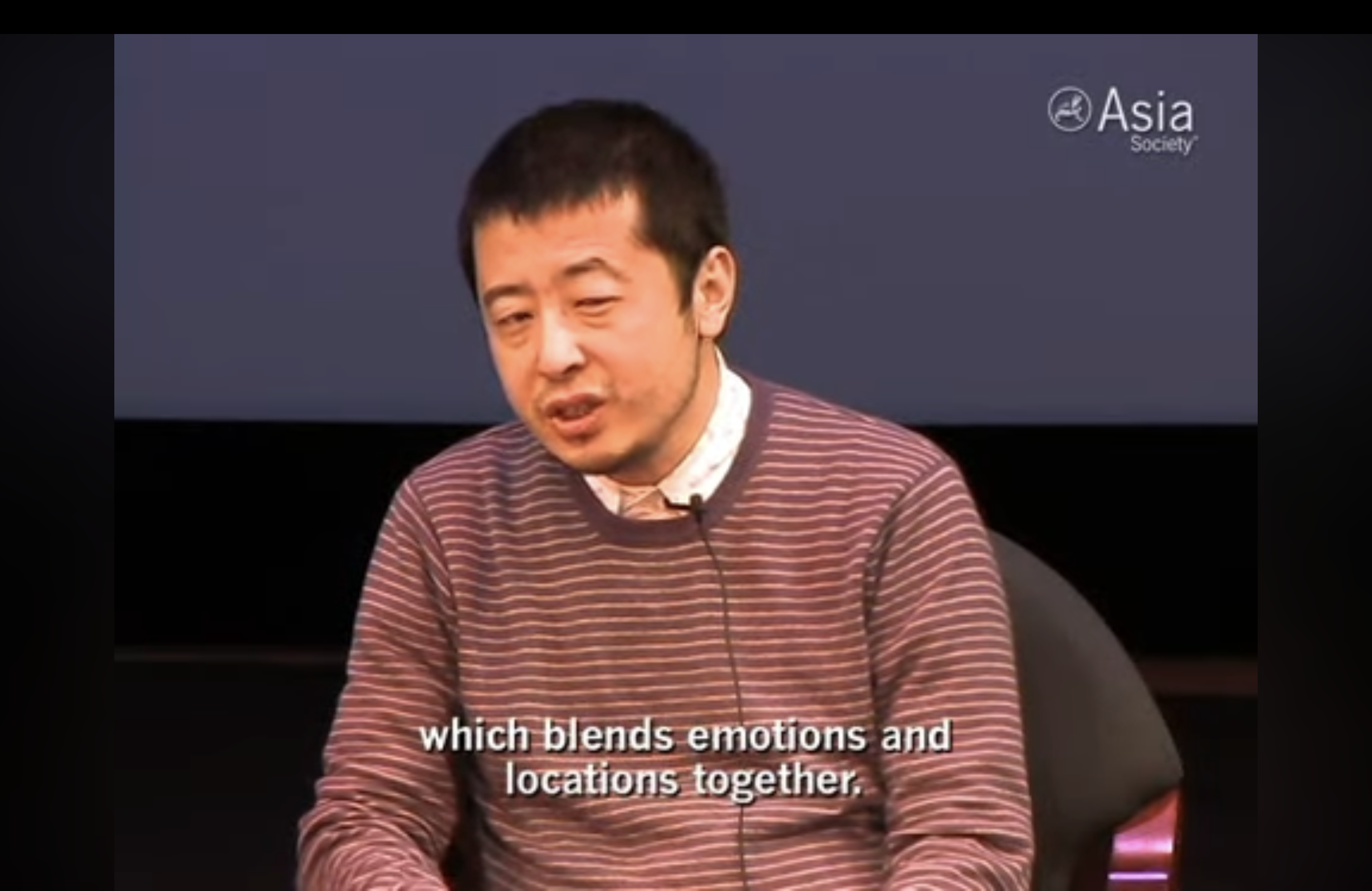
"Zhen" (real), "Shan" (benevolence), "Mei" (beauty)
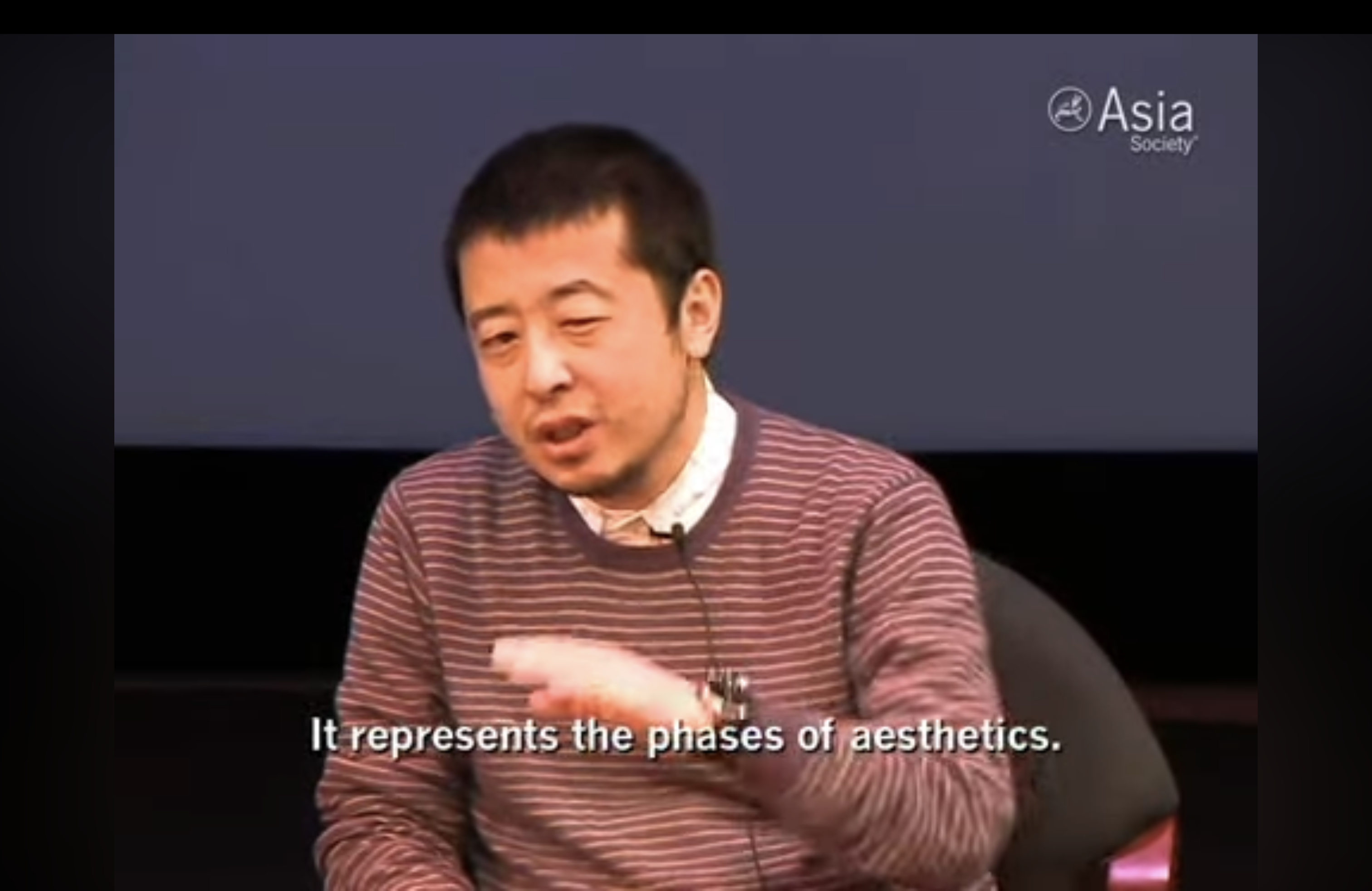
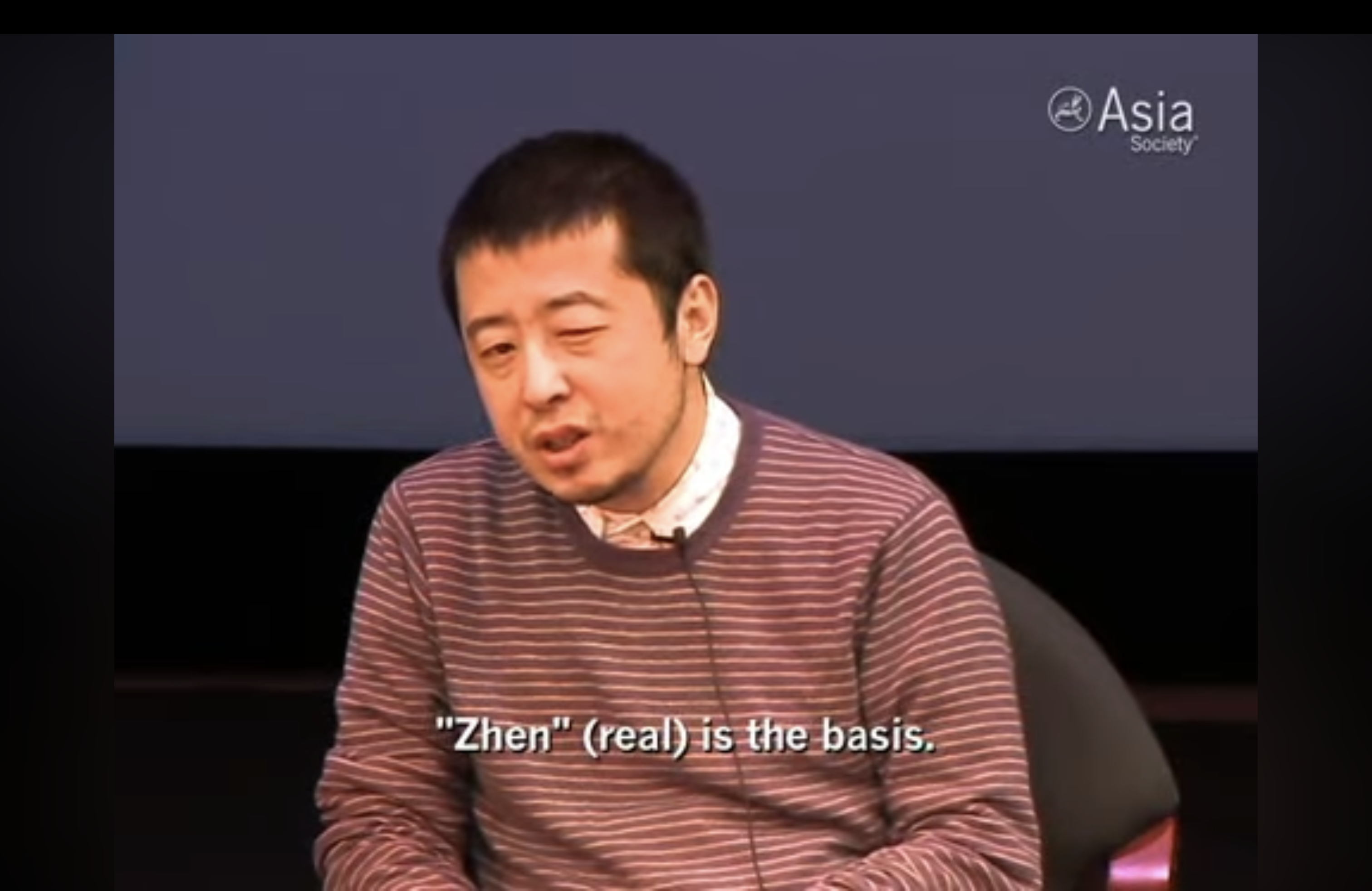
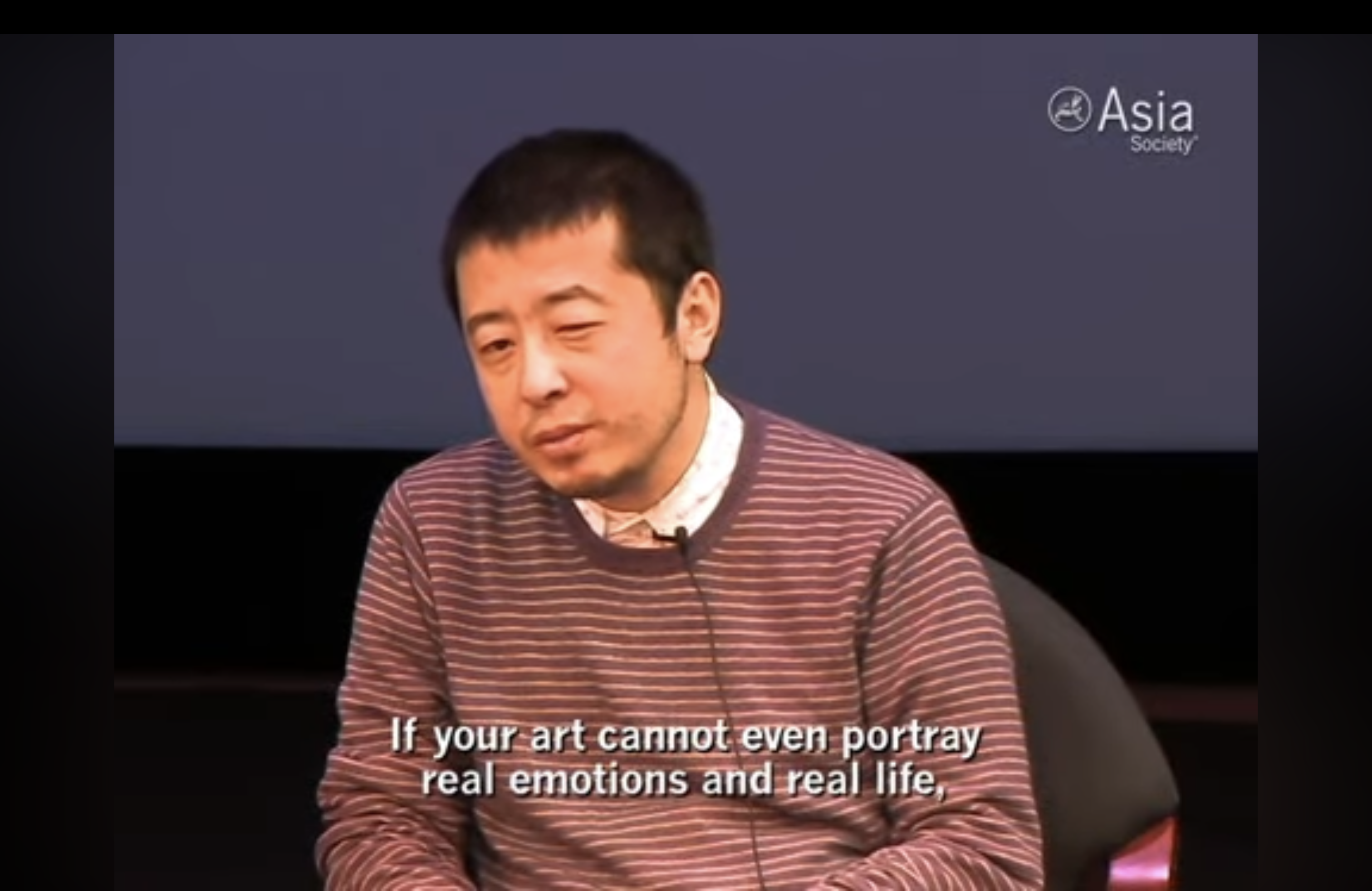
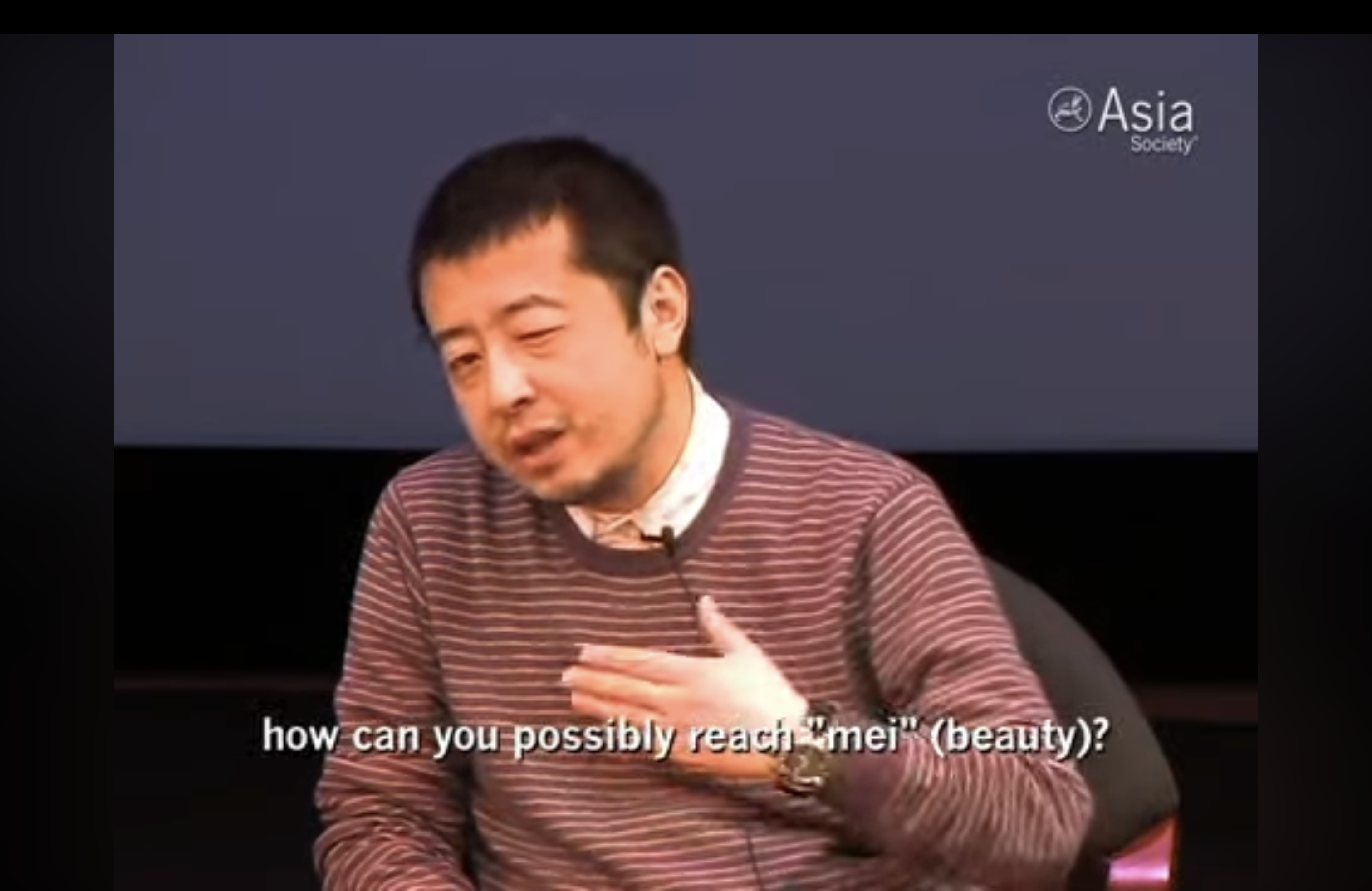
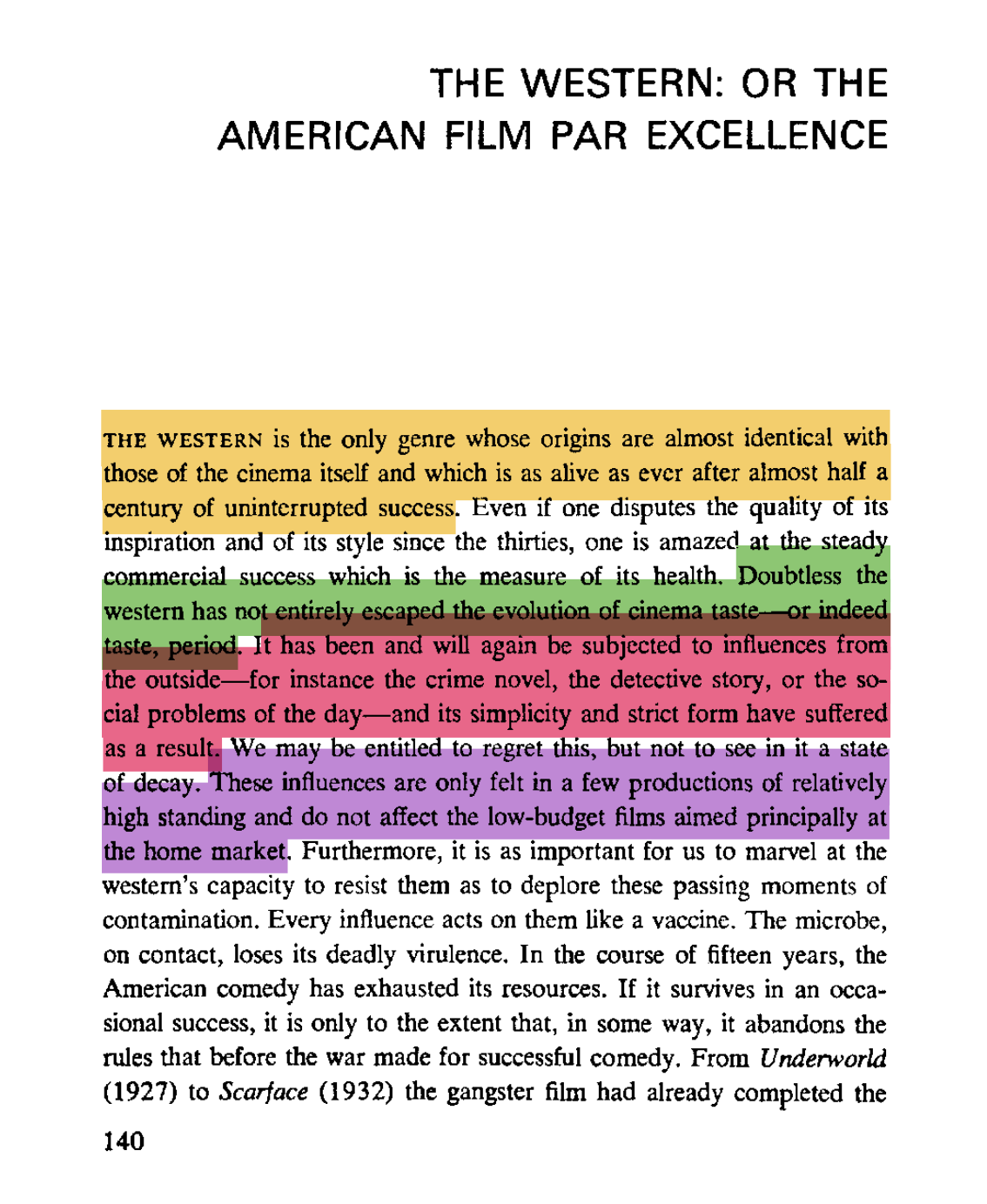
Last night I was in a state of so many ideas, so much possibility. I read two Bazin essays about the Western, was thinking about the genre in respect to the noir and the crime thriller and the spy film. Ultimately I landed at a place of questioning how many ideas I could put in a film like this. Bazin focuses on the simplicity of the western and notes a shift after the 40s when it began to be utilized as a vehicle for other ideas: the superwestern is what he called it. I always thought of this film as a post-western; both are about a sort of beyond.
An abridged presentation of the essays:
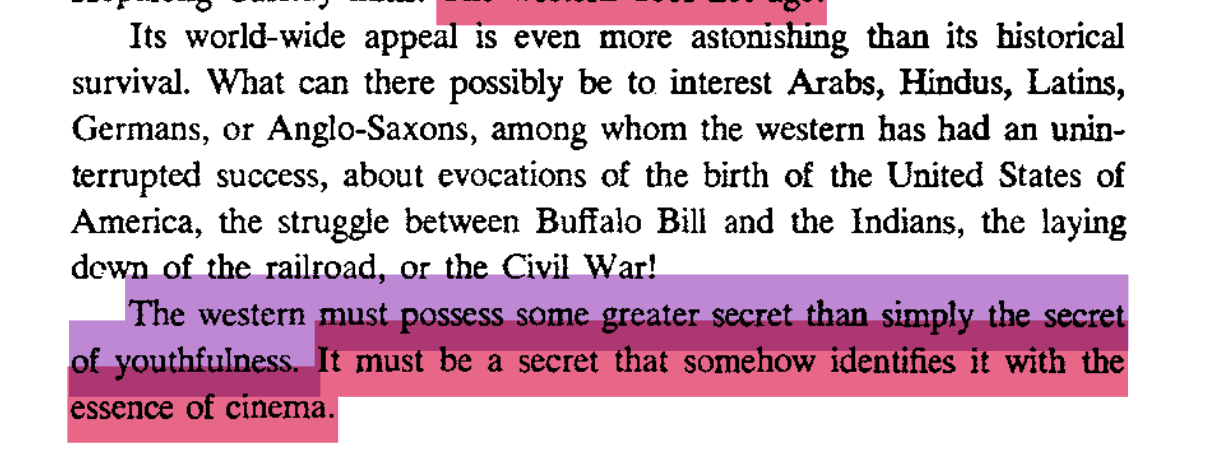
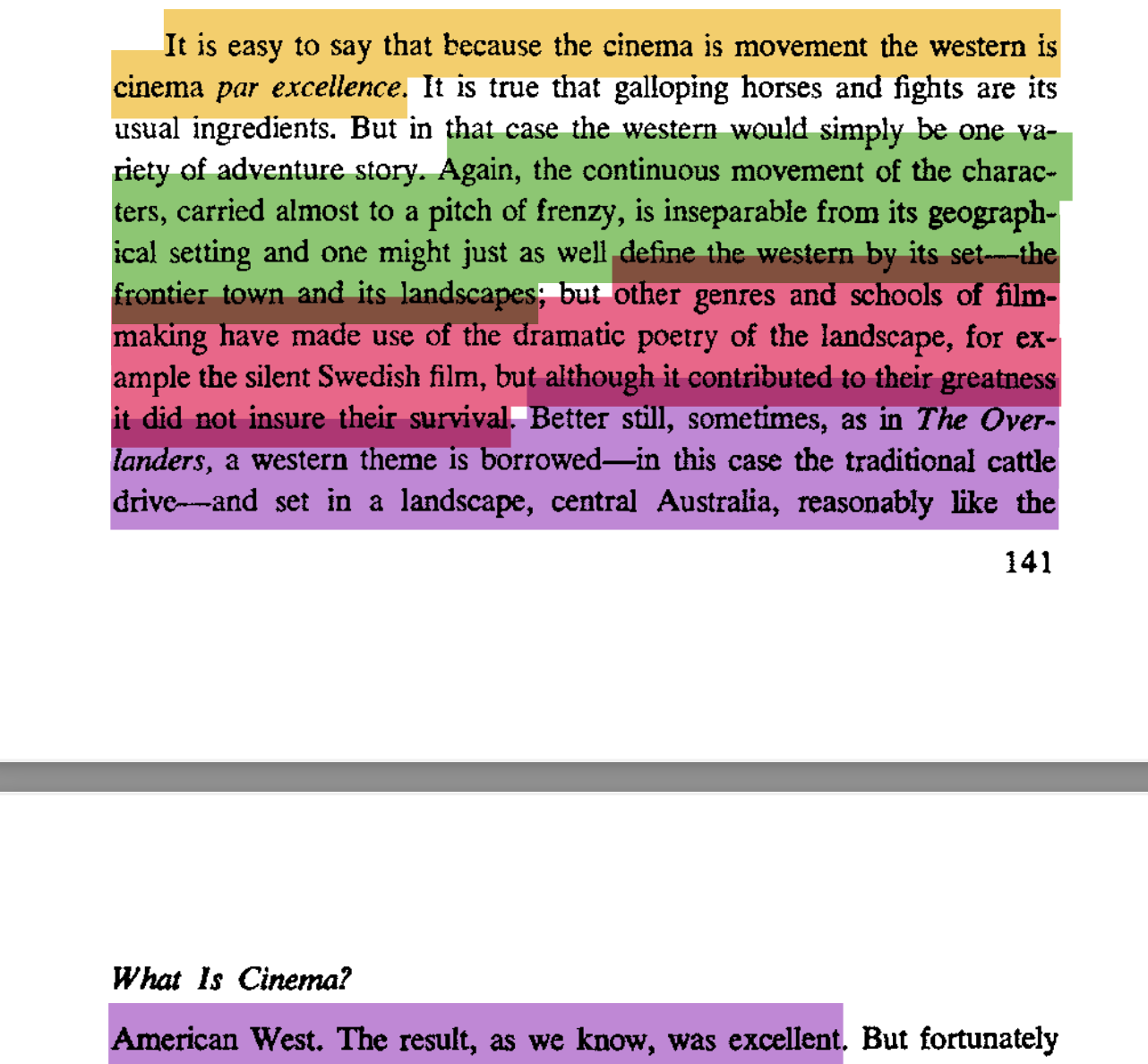

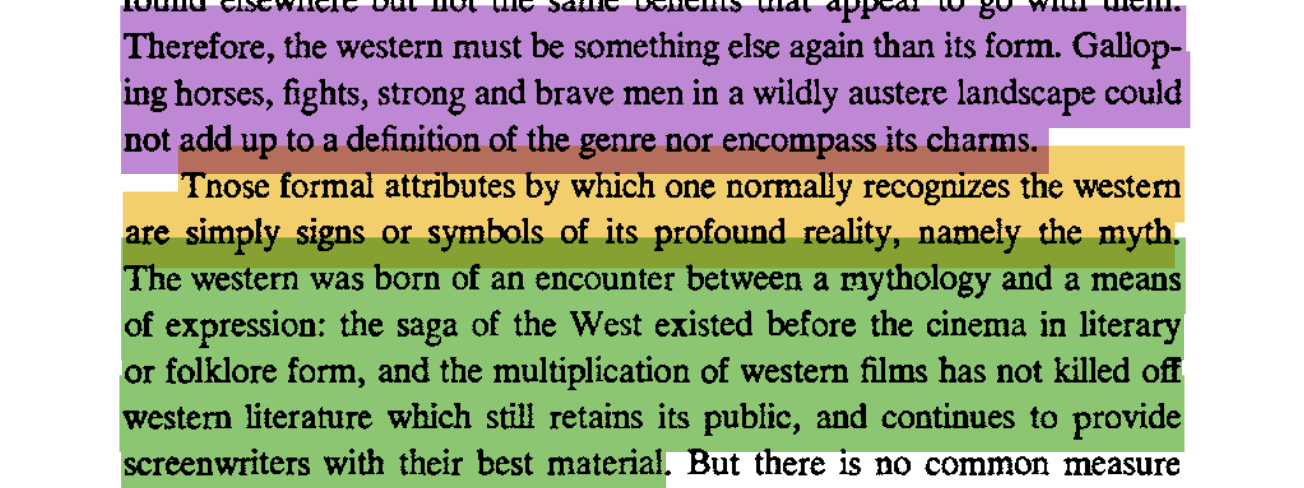
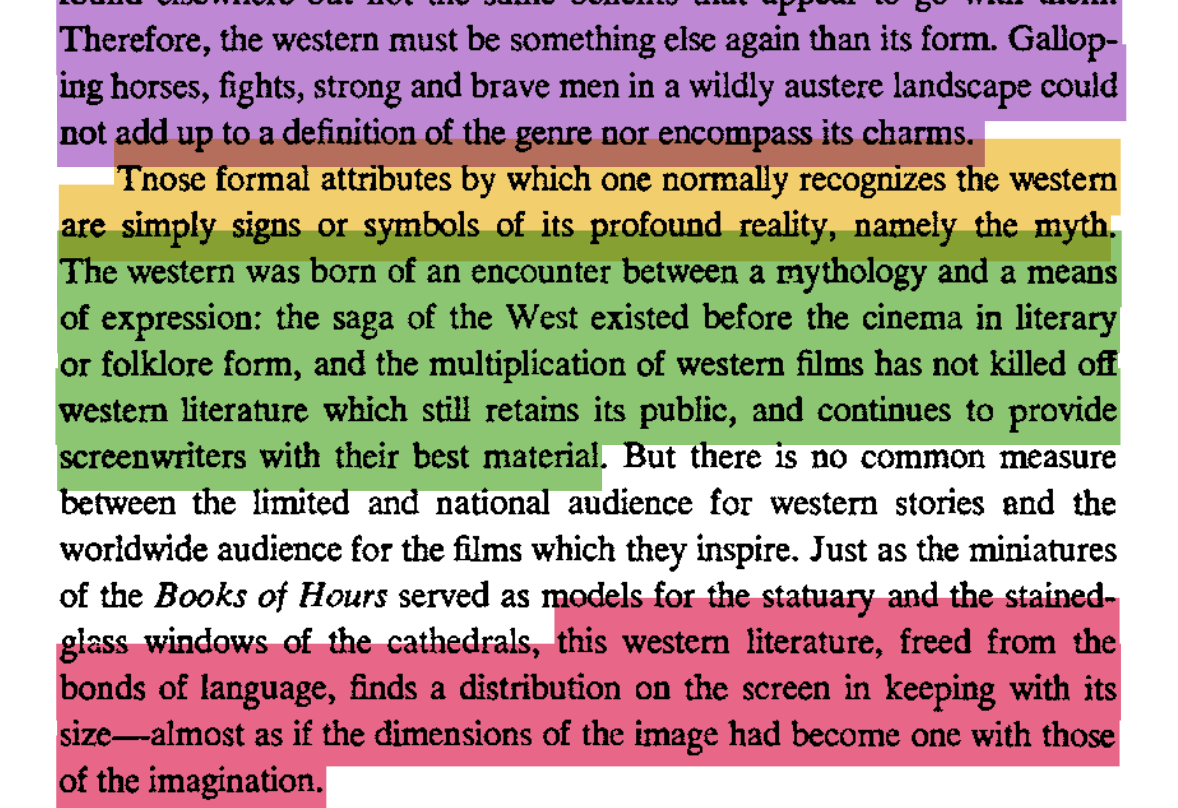
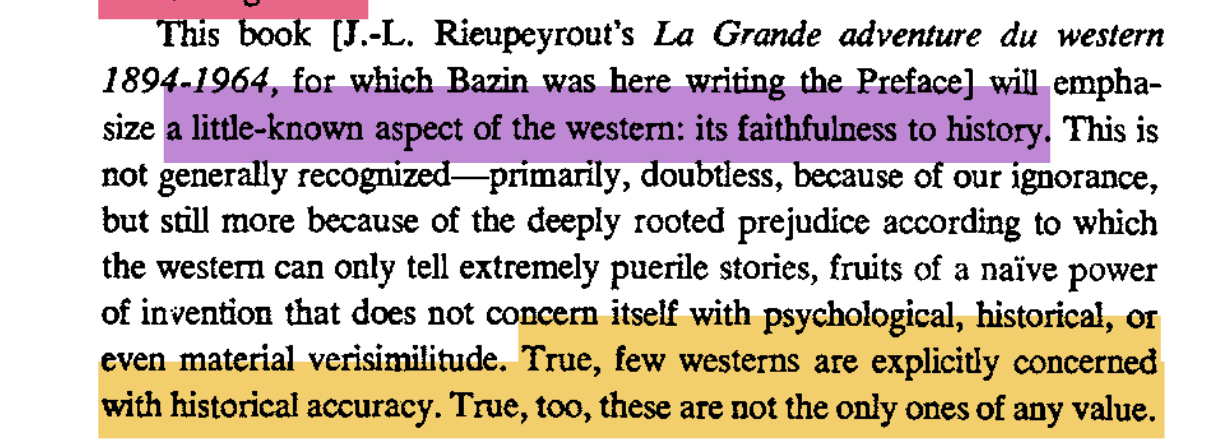
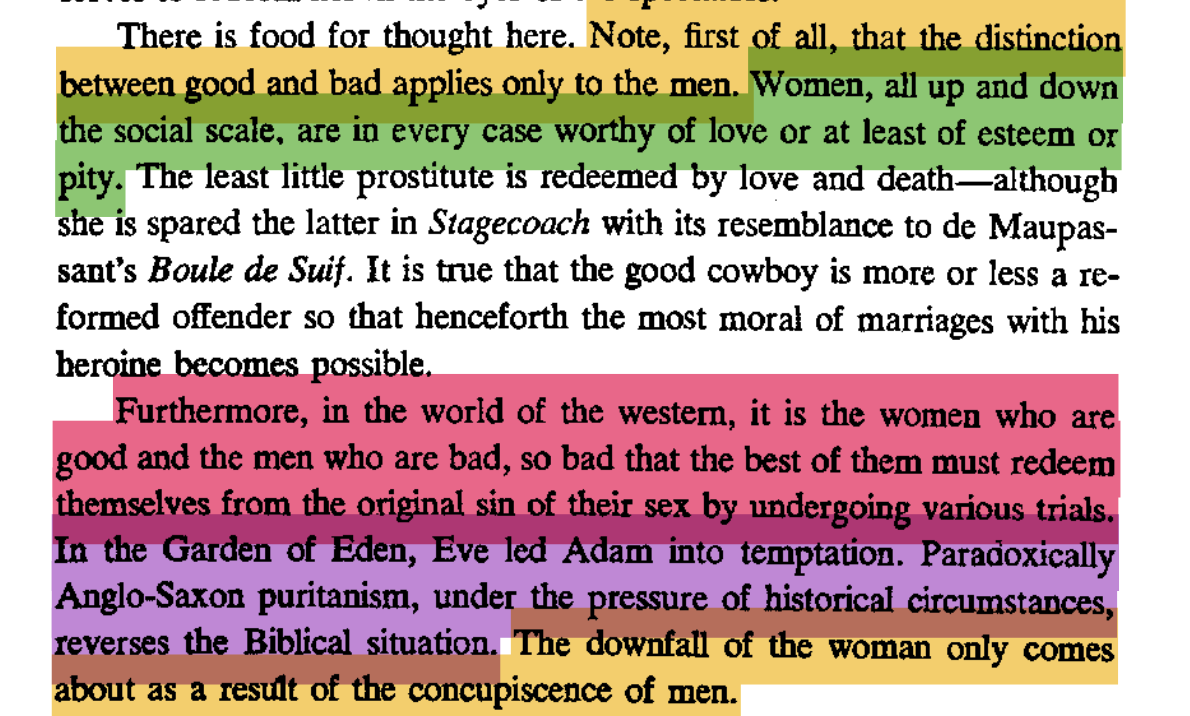
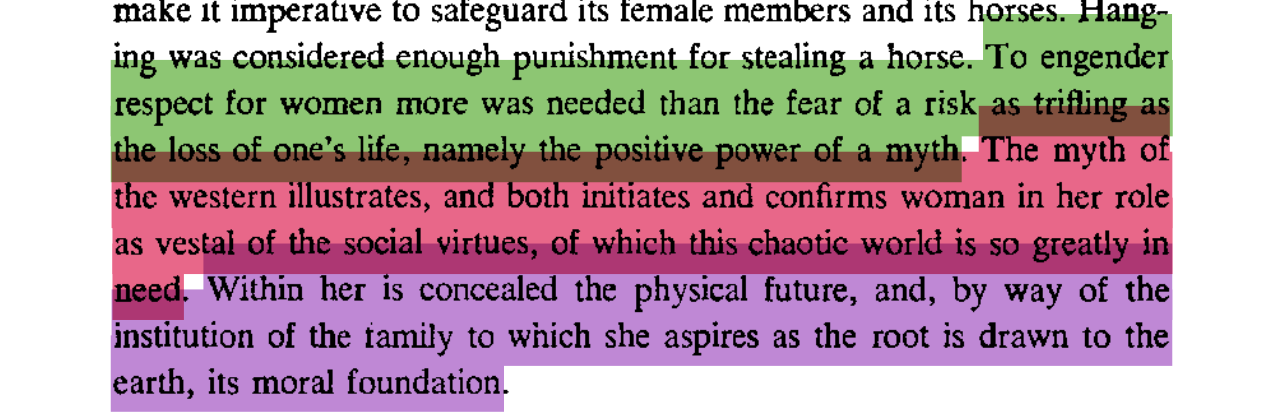
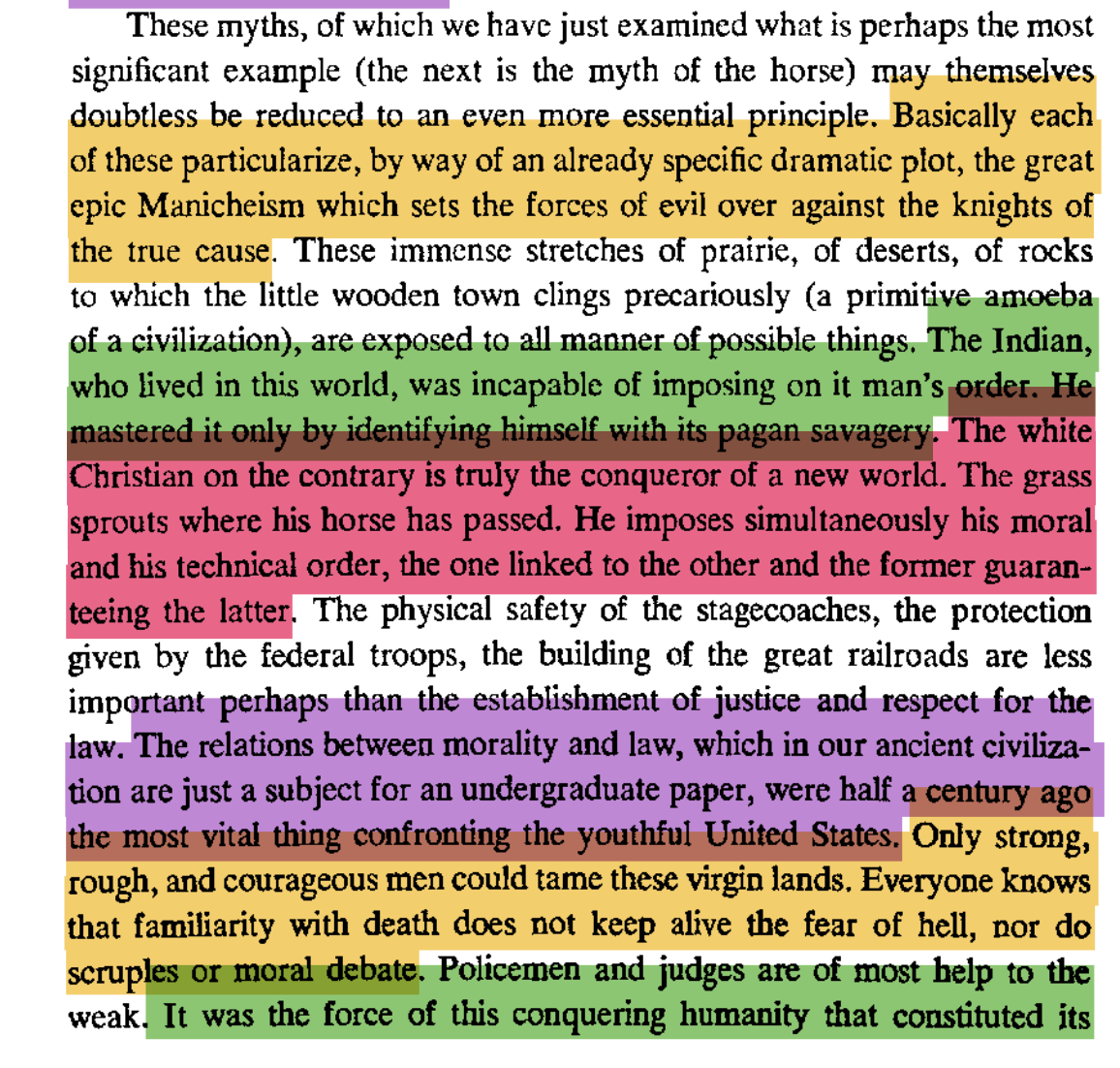
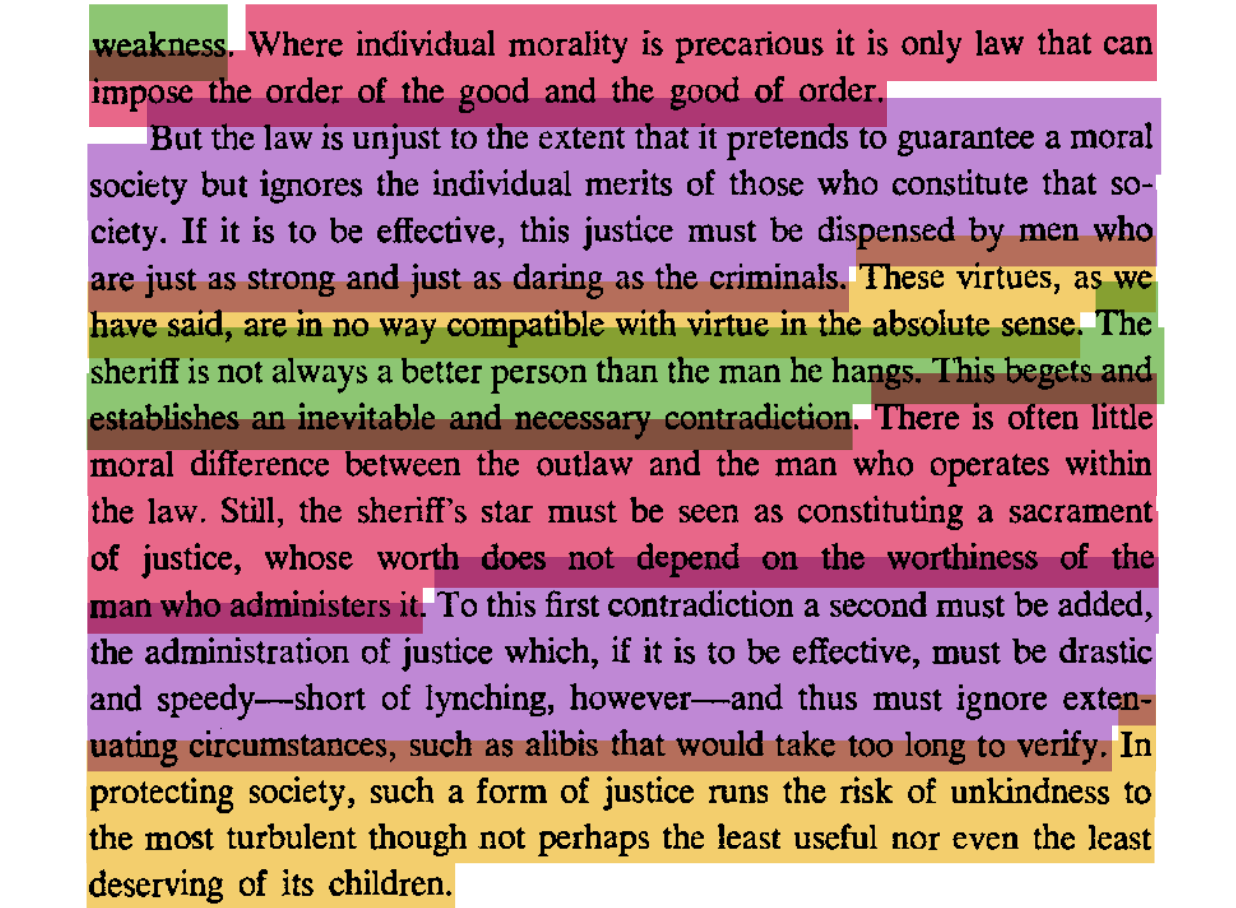
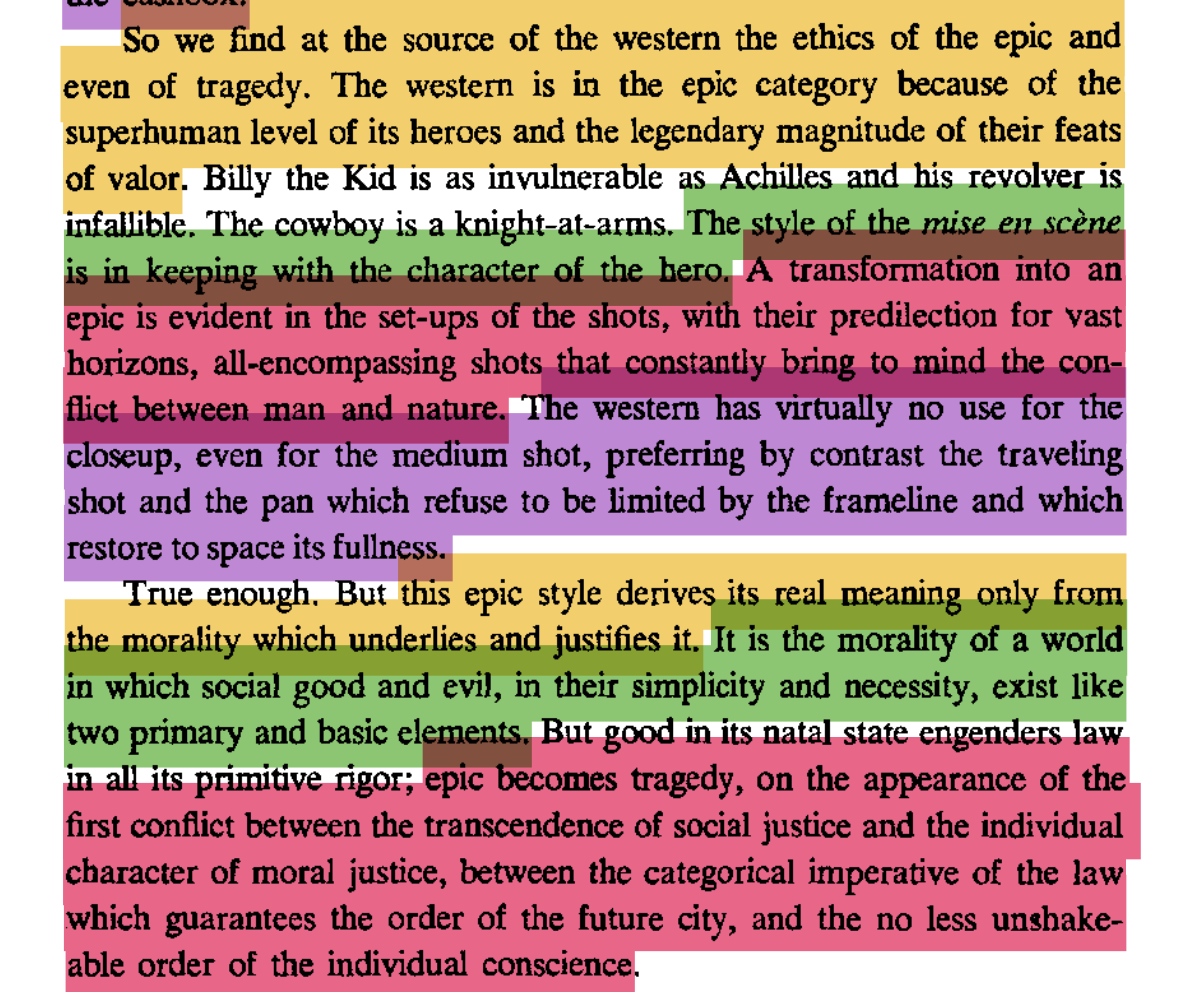
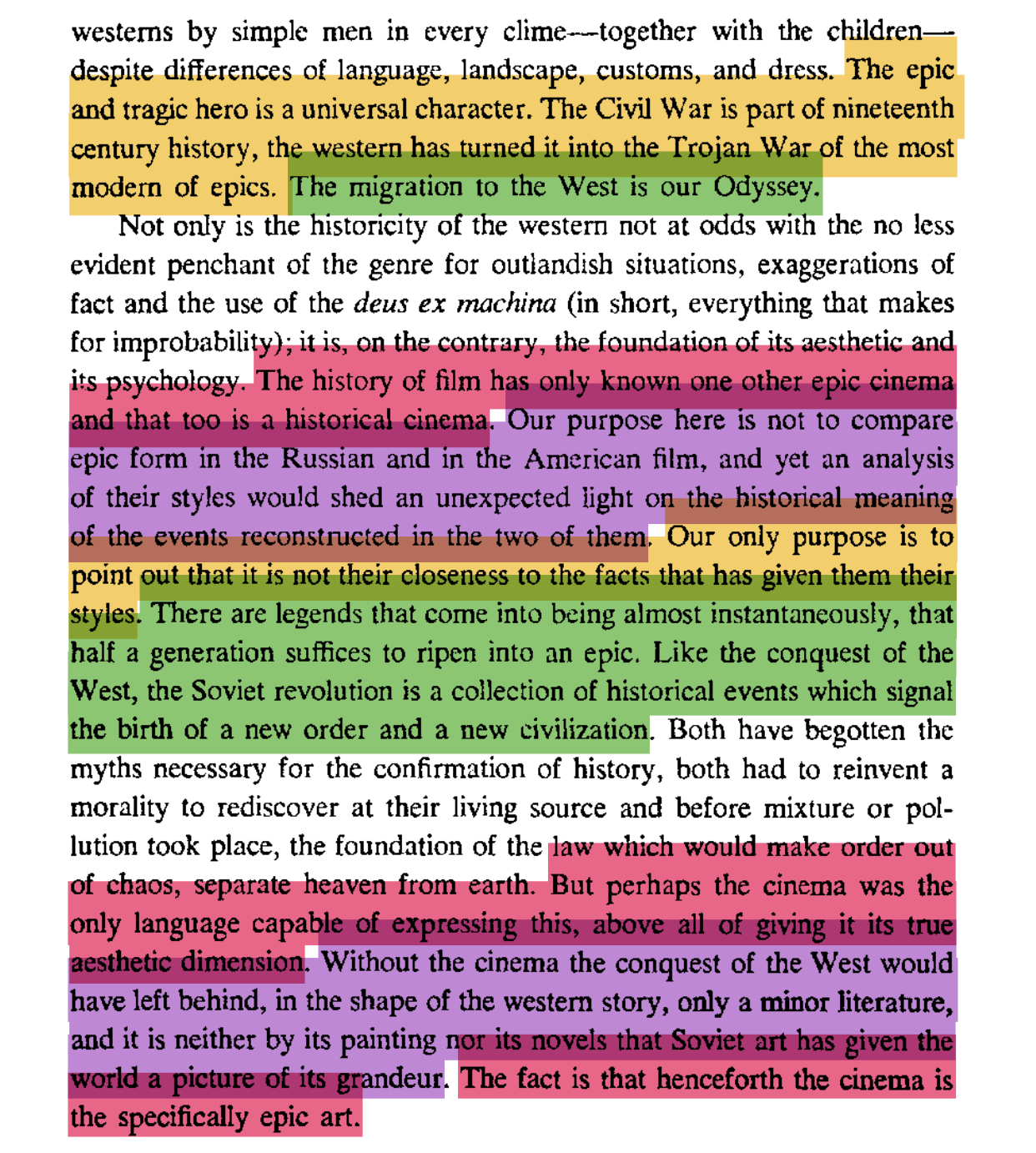
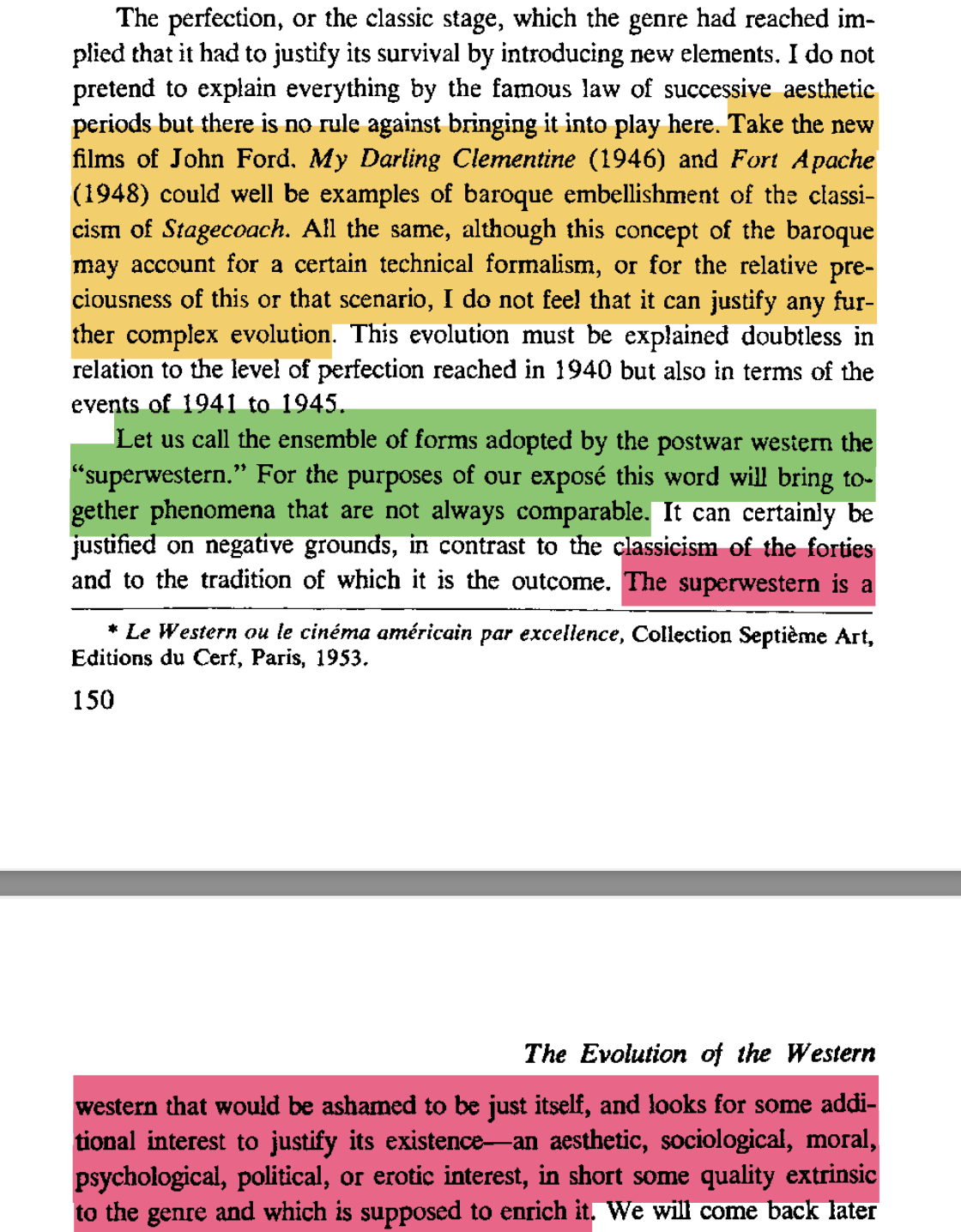
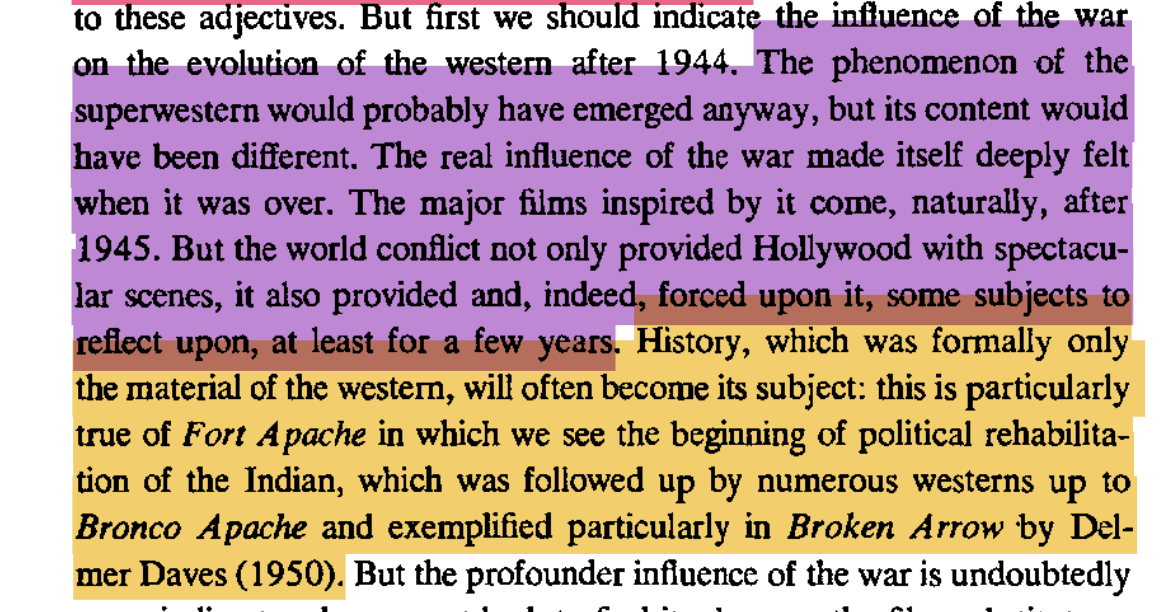
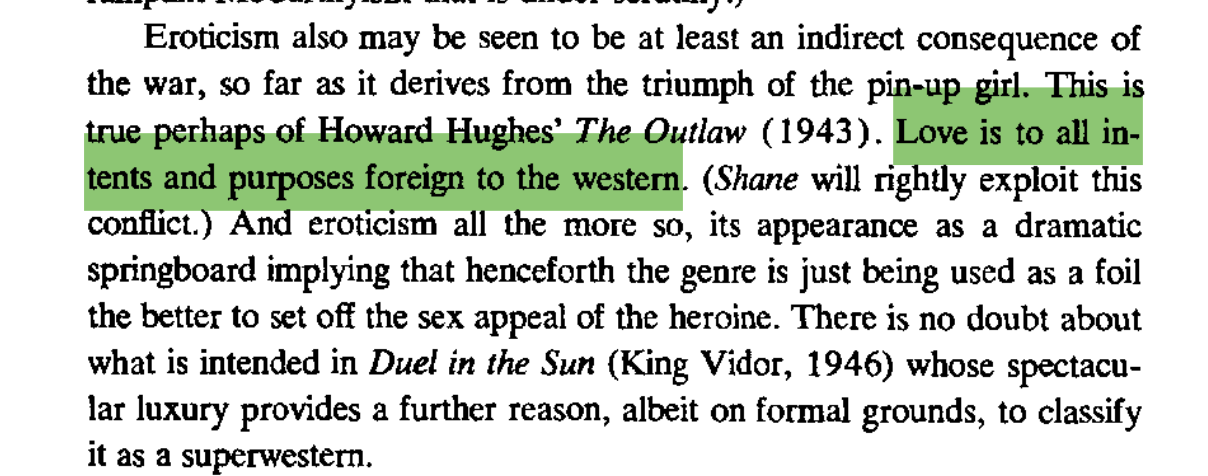
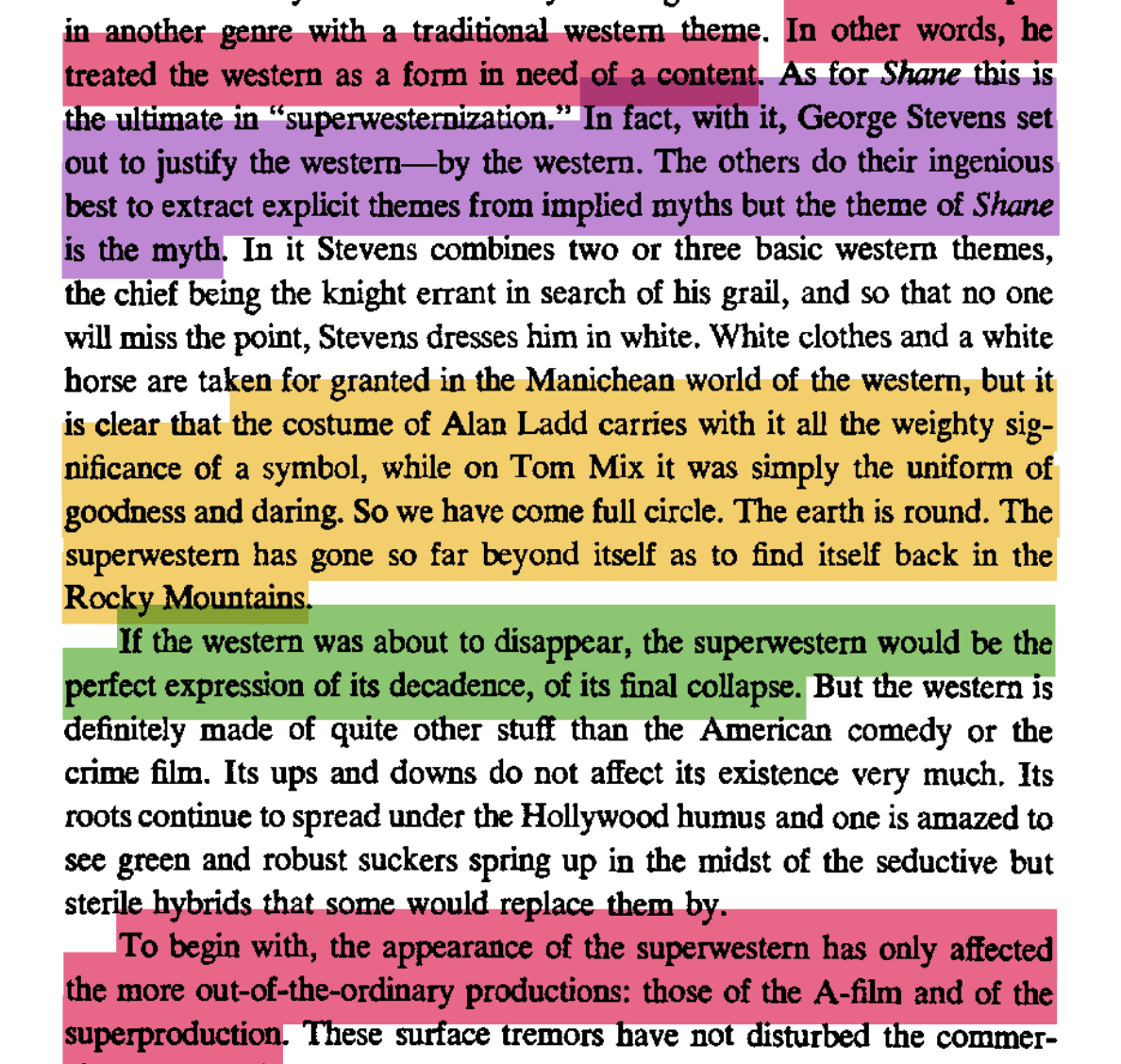
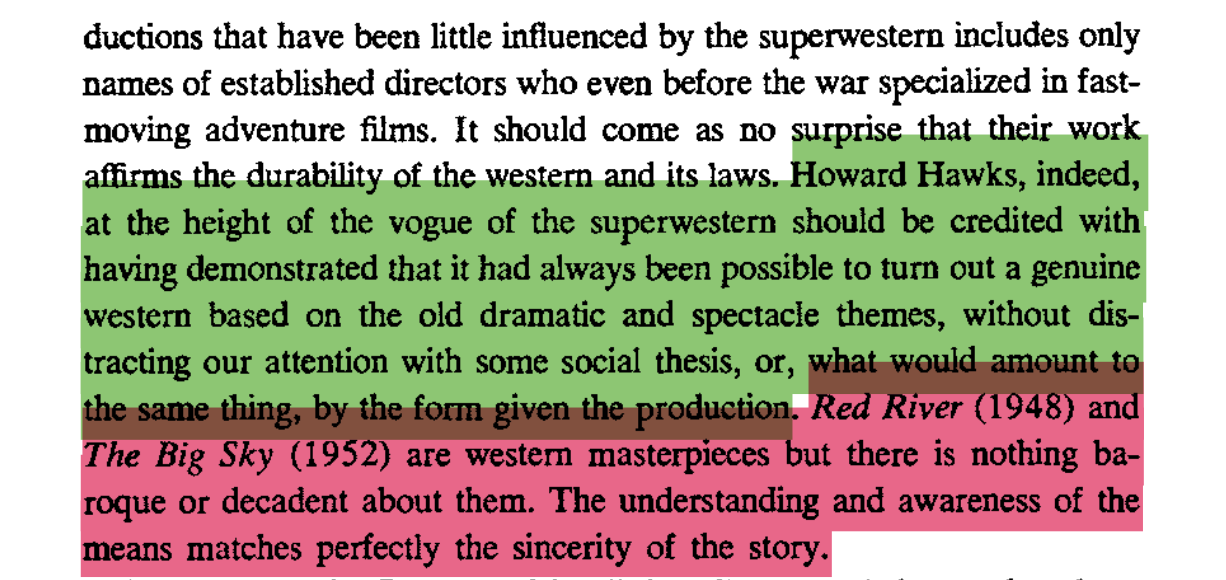
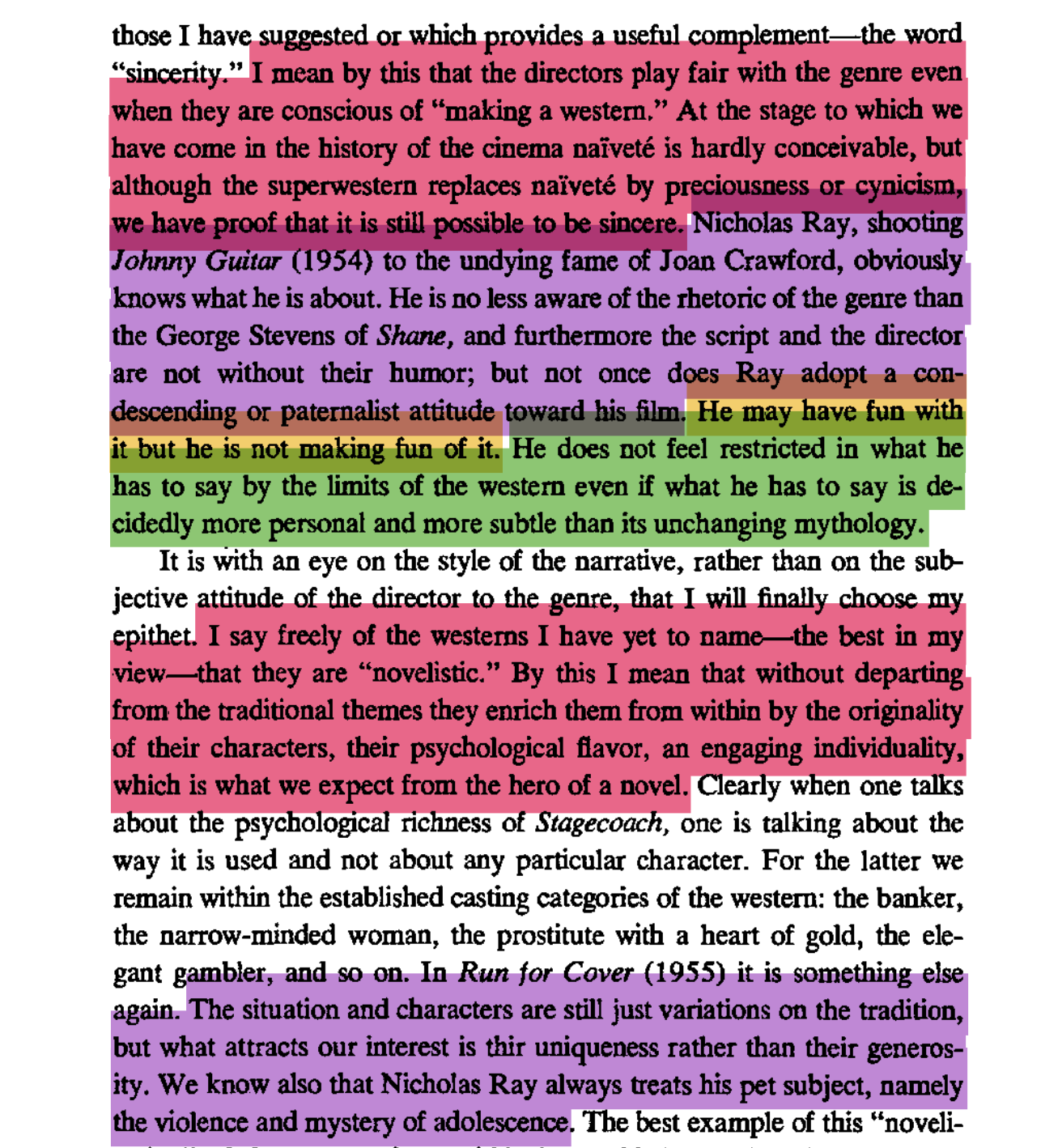
I am aware that when there is too much it becomes noise. The last page serves as an example.
A film is a technology used to bring forward ideas. Or it can be. It is many other things.
A film is a form of popular entertainment. It used to be more popular but there are many other types of popular entertainment now.
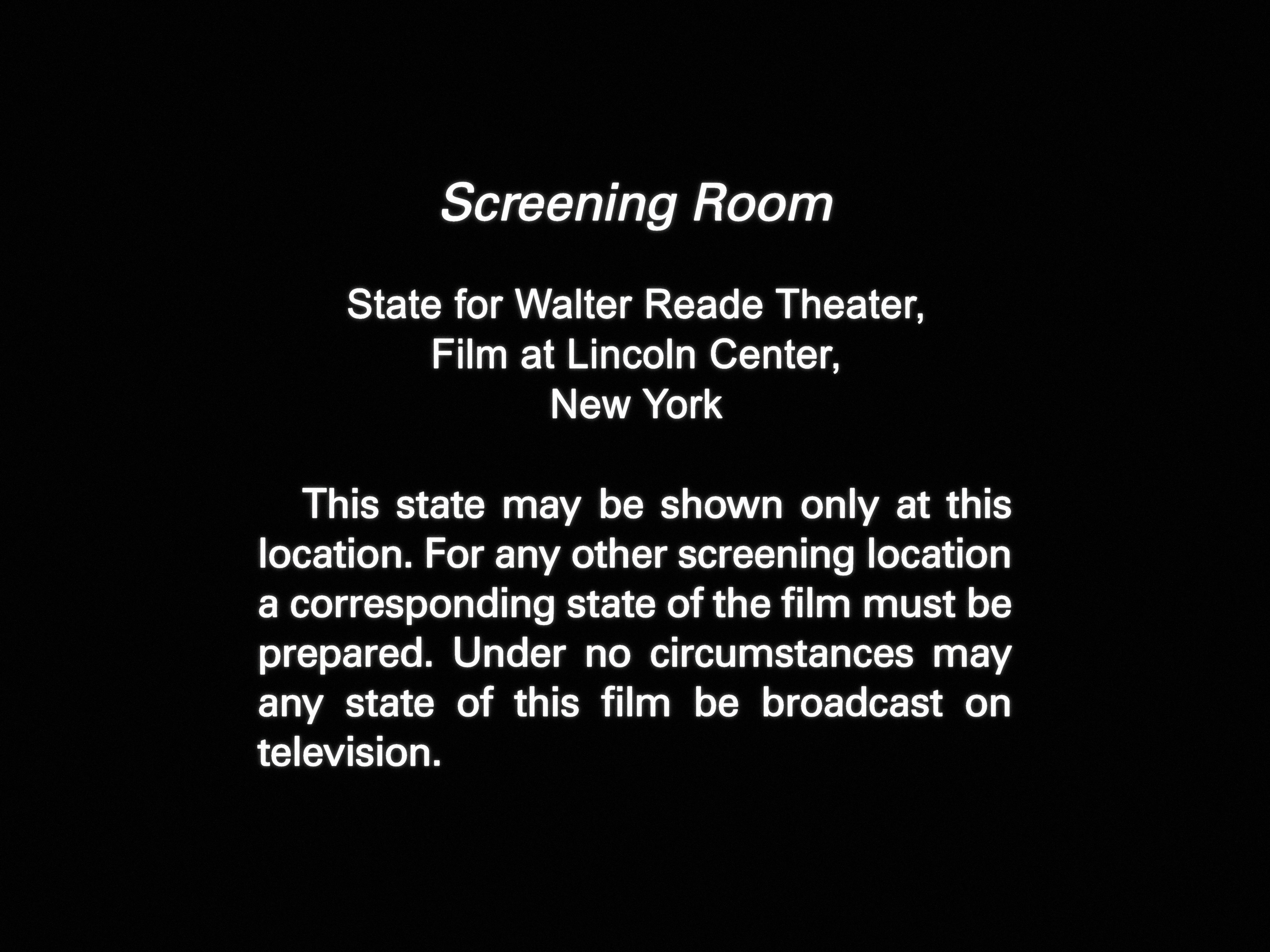
The word television: tēle (meaning "far" or "at a distance") and the Latin root visio (meaning "sight" or "seeing"), literally translating to "seeing from afar." The question of what is and isn't television. In relation to the Lumiere's who built cinema from: kinēma (κίνημα), meaning "movement" or "motion" and graphein (γράφω), meaning "to write" or "to record".
I realize that in establishing conditions such as these it opens up the possibility for the work to fail.
Speed and time:
Watching Pusher, car scenes, thinking about G Wagon Rental. Shooting all interstitial scenes through the rental. Luxury cars as a prop, significant bang for buck. Like hotel rooms would be too. Bowery, Mercer, etc. — Drake shit (Missoni @ the Byblos).
How many ideas can be contained in a film that is between 70 and 90 minutes in length
The structure of said ideas, how they connect, nestle, fracture, expand, contract
The mixing of concrete is an inexact science.
I have been reading Zhuangzi's Basic Writings. In part to prepare for this film, in part because the text is telling me things I need at this moment. As I type, I try to piece together the meaning of that sort of framing, dialogic relationship, my needs, this point in time. Much of the text is about reality and fate, at least the parts that stick with me. What S said about conditions.
"Therefore the aphorism says, 'Do not deviate from your orders; do not press for completion.' To go beyond the limit is excess; to deviate from orders or press for completion is a dangerous thing. A good completion takes a long time; a bad completion cannot be changed later. Can you afford to be careless?
"Just go along with things and let your mind move freely. Resign yourself to what cannot be avoided and nourish what is within you this is best. What more do you have to do to fulfill your mission? Nothing is as good as following orders (obeying fate)-that's how difficult it is!
"Life, death, preservation, loss, failure, success, poverty, riches, worthiness, unworthiness, slander, fame, hunger, thirst, cold, heat — these are the alternations of the world, the workings of fate. Day and night they change place before us and wisdom cannoy spy out their source. Therefore, they should not be enough to destroy your harmony; they should not be allowed to enter the storehouse of spirit. If you can harmonize and delight in them, master them and never be at a loss for joy, if you can do this day and night without break and make it be spring with everything, mingling with all and creating the moment within your own mind — this is what I call being whole in power."
"Among level things, water at rest is the most perfect, and therefore it can serve as a standard. It guards what is inside and shows no movement otuside. Virtue is the establishment of perfect harmony. Though virtue takes no form, things cannot break away from it."
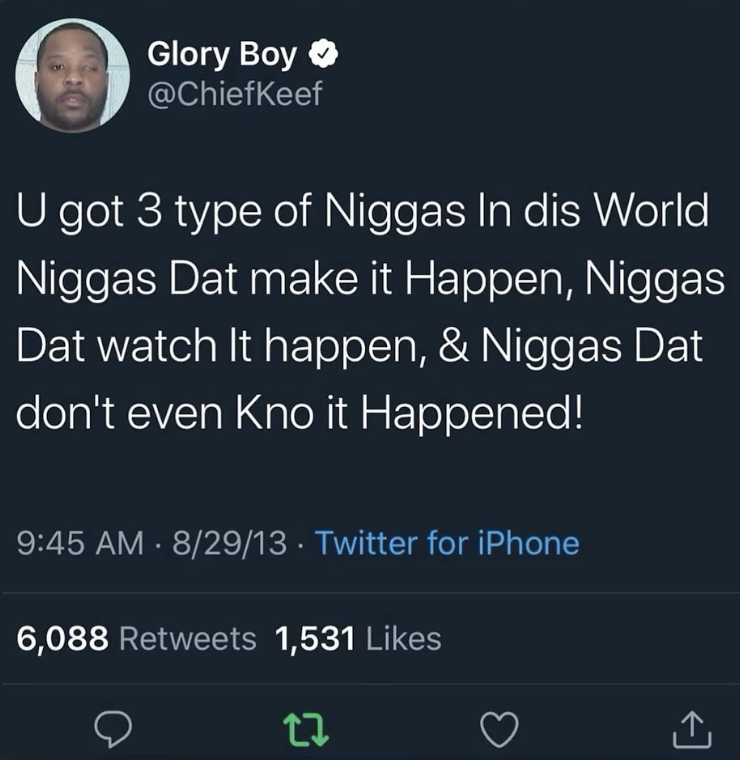
3 type according to Chief Keef:
Rear projection:
I am leaning towards the idea of allocating a significant budget for the film towards the rental of a large studio space that could be configured to create sets largely based around the leveraging of rear projection. This would allow for maximum flexibility of shoot times, lighting conditions, and maximize the potential of locations. One of the main formal questions I am working through is genre: western, noir, spy, thriller. They each have different languages of shot types. Noirs and interiors, close-ups of the face vs. Westerns and the landscape, the scale of the body in relation to the mis en scene. Cities naturally shape films away from the Western.
Accomplishing this would create a methodology in which I would have zero limitations for the narrative arc of the film.
The reality is that locking yourself in a room making five beats a day for three summers is tremendously difficult.
I feel as though I must learn to write again. Not just the mechanical motion of my fingers on keyboard, but the way of living towards a condition oriented towards the production of writing. The film is a vague shape and idea right now, I need to develop it into concreteness. This is done through writing, through thinking. Writing and thinking are done through living and reading. My sentences are not as sharp as they could be right now. I must whet the knife.
As I narrow down on the conditions that will shape what can be written, I work towards what will be written. There is a necessity to repeating oneself. It implies a forgetting.
I find I am constantly forgetting things. I used to pride myself on my memory. I have subjected myself to the hazy blur, with gaps beyond recollection.
It is normal for me to disidentify from my older writings, from my older selves. I look back like, "I did that?", "I wrote that?", there is something foreign, something out of my grasp about my past selves.
On titling a debut:
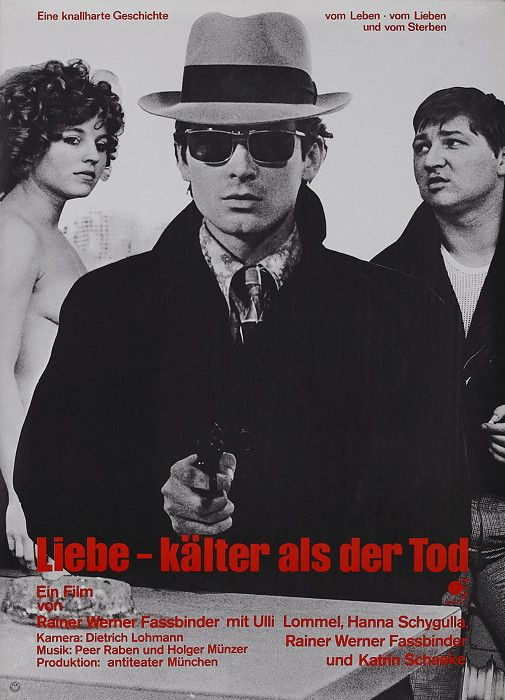
Beginning with the title sequence — that is my inclination. In order to sketch the title sequence, I must write the title.
Writing of the Holiest Purpose
or: Kismet
Writing of the Holiest Purpose
or: Kismet
This is the strongest title for the time being. Perhaps another one will come to mind later.
This morning I made myself an instant coffee and began to write. Another one seems necessary after this.
I have a couple of hours before work. I must make the most of them. The hourglass turns.
Production Meeting No. 1 (formally):
The formalism does matter to me. This film as an exercise in formalism. Met M at Milano's, beers there then at his, talking about everything and nothing and the film. Setting a deadline. Talking about geography, maps, this working method, footprints, legibility, traces. Talking about life, pasts, ambitions, futures, opportunitities. Conducting analyses. The marketplace of ideas; how many ideas can go into a thing; setting another point to check in.
Things are moving noir/spy/thriller; away from the Western. Because of the conditions. But also that these conditions create PR conditions: "they shot a film in studio with rear projection etc." type beat as narrative. At the same time building up my profile before the film is Public. Via Music and Art. The Import-Export Game.
The rough timeline in my mind is to arrive at an outline in the next couple of weeks, then a script soon after, then to be prepared to go into production in January in a studio. For a month or two.
Old games of traincars and dominoes: the way things go
I started acting like I was (already) famous
And I was explaining the performance of the director to M. I told him I would find him a book on producers. Such that he could best produce.
Now I've texted him: Dino De Laurentiis wikipedia page + biography. At this moment my mind spreads out across links, so many links. Films, writings, texts.
Oceania as the extremities of the Anglosphere; where historicism, canonization, etc., factors in
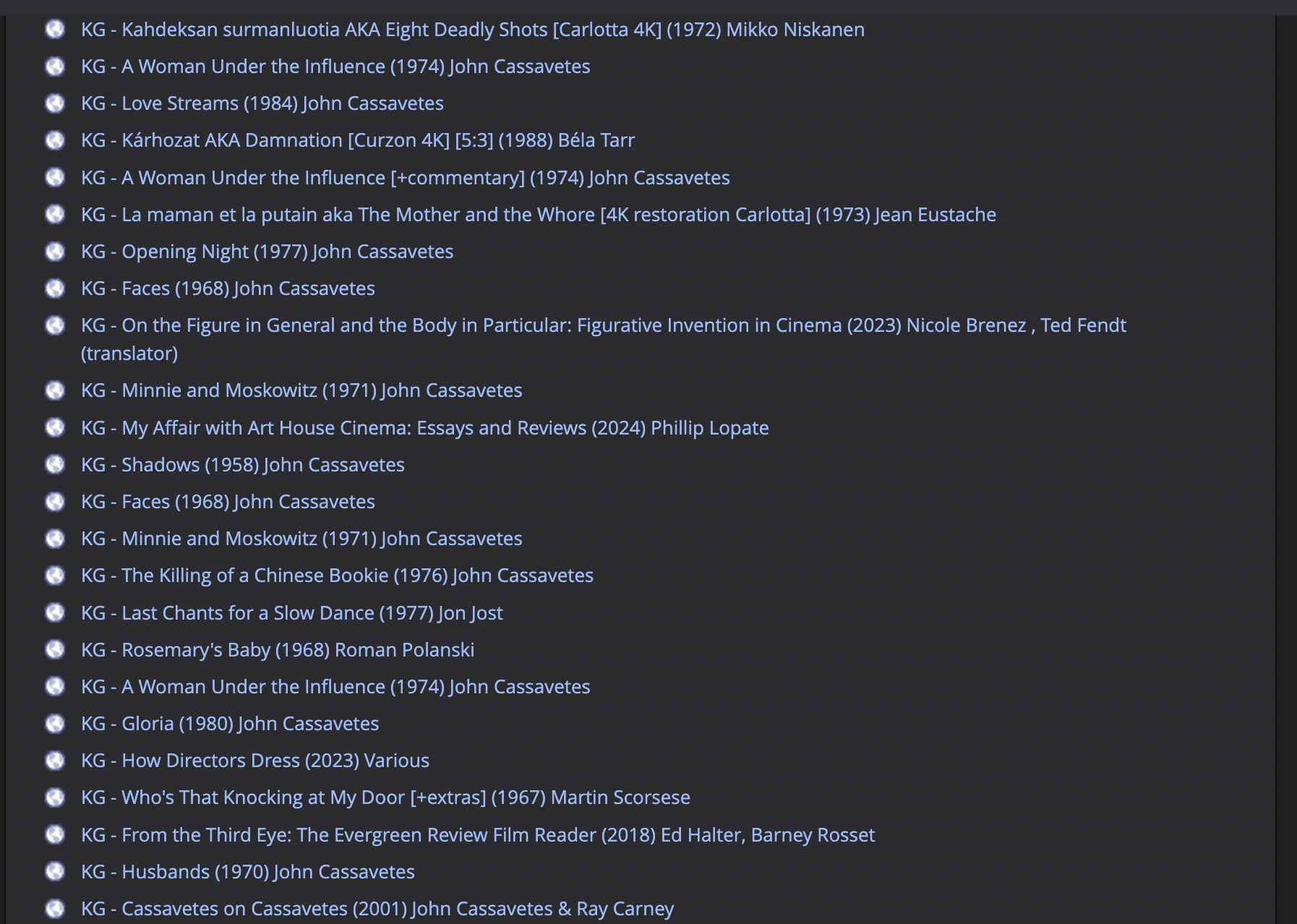
At the heart of the film is an event. People love events. Sometimes Events become Spectacle(s). I got coffee with Laszlo on Sunday; he lead me to it (this idea // The Spectacle), but I was thinking about (the masses upon the grass)
How to begin again:
I sent M various materials from past work, materials that were sketches, writings, ideas. Pile of wreckage. Attempt and attempt and attempt.
Requisite mental clarity. Peace, initiative, action.
This will be the most difficult mission until the next one.
Yesterday (10.22.26):
I woke up later than I would have liked and then met Z at El Parce Cafe. Got two empanadas, a guava and cheese pastry, and a guanabana smoothie. We took the train in the city and then went in search of a bathroom. Ended up at a kratom bar. Got a large white powder and a club mate. Went to the foundation where J works at and he shows at. We ended up talking an older woman who asked us if we were painters.
After walking 10 miles while working, I met N and we took the train to Sunset Park and got food together before M and M's housewarming party. I only ate one dumpling and left the rest in their fridge. N said he didn't expect the night to last so long, but I did, because I know how H and J have been recently.
I talkedd with H and M about my ideas for the film; frameworks for production rather than concrete ideas relating to plot. But the importance of language across all domains: what the mis en scene looks like, who the actors are and what their images carry (in the sense of Bressonian models, is the language I used), and what the image would be like given the rear projection. H with functional questions about lighting and the sound mix. My response about language, but also about the opportunities that this form would create. And the social atmosphere of having a place to make such a thing. Where that could take us.
For a significant amount of time I spoke with J about sports. He's in the process of initiation. I thought back to my writings on sports in publicsecrets, and also of I and her relation to T who wants to publish it. Now the matter of age, and the question in my mind of discovery. With J, I was trying to explain so much context about past players, events, history. I've noted before how art functions in the same way – only there are significantly more prostheticized memories and documention of sports (statistics, highlights, interviews, recaps, etc.).
I was trying to explain Swaggy P and he had no idea who he was. I should've mentioned Iggy Azalea. Baby mama drama. My ex drama of the last two days, the brain space it has occupied; the idea of flexing up; the idea of crashing out (avoided, maybe ellided) publicly; and then writing, what it is, what it can be. And then what the text signifies.
J and I were talking about making things with people and the economic conditions that surround collaboration. We were talking about sacrificing time. And we were talking about the value of the thing we sought to make. The tradeoffs to make it possible. The act of juggling the time of others. And what we do for the other.
Broad strokes of the course of the night: I talked with R about work, I talked with A about family, teeth, dengue, I talked with J about making work, clout, planning, coordination, I talked with H and M about the movie, I talked with J about girls, I talked with N about that conversation in our car back to our side of town. Before, we were talking with I and M about pause and other jokes of that sort. And our actions.
I watched and listened to actions have consequences in its entirety. Thinking about legibility. The Right Above It sample. And: the broader aspects of legibility.
The night before I was talking with J and others about legibility. Things that could have happened but didn't happen. This came back into the fold tonight talking to J at M's. Conversations about how we sculpt a life. How one is read in respect to the world; and how to make oneself readable in the maelstrom of the world. How we spend our free time. Free time: dollar bills flying
The reality right now is that this film is in the process of migrating from the state of ideas into the state of actuality.
Much of the film is dictated by pragmatism, audience, feasibility. I am trying to build it in my mind before it moves to paper.
The night before last I was talking to I about what a serious attempt would be. Seriousness across all sectors.
And while the text works through and towards the conditions underlying the film, the reality is that I must write a script. A script that takes in ideas, the right amount of ideas, and processes them into coherent narrative action. Such that a successful film (financially) can come of this film.
I am centering myself on the idea of Writing of the Holiest Purpose and what that can be.
The illusion of production:
that accumulation substantiates into something.
I started reading Elif Batuman's dissertation The Windmill and the Giant: Double-entry Bookkeeping in the Novel. Working through it is going to take some time, but I know that this will be the most important thing that I can do before committing to writing the script for this film.
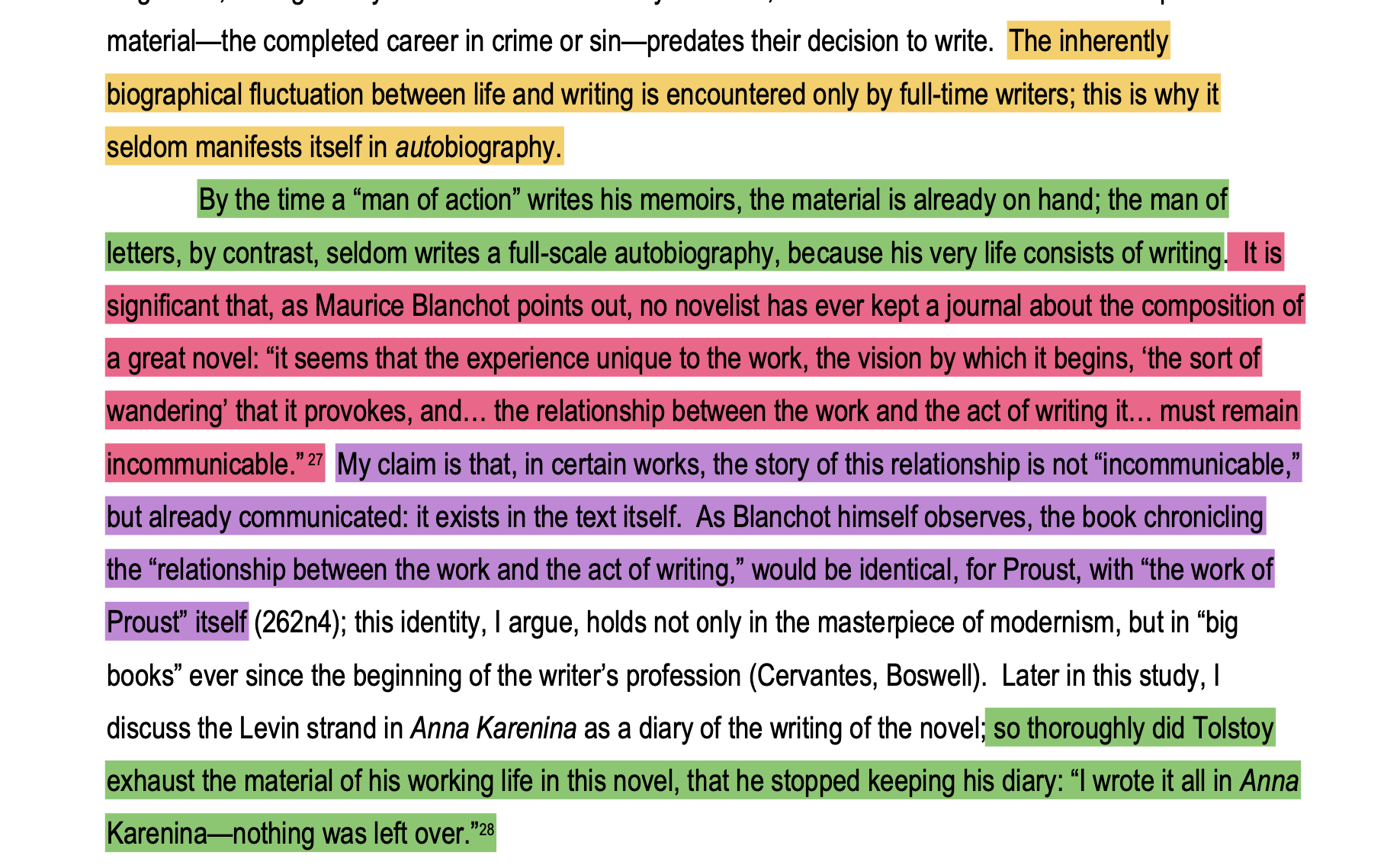
Bookkeeping itself is as old as writing; the earliest known texts are Mesopotamian tablets of accounts, dating to the third millennium BC. It is both interesting and logical that writing was first "employed for book-keeping rather than recording myths and rituals" after all, myths and rituals could be committed to memory, and derived their authority from an external source (priestly culture, etc.); numbers derived their authority from the technology of writing itself. Writing is a primary feature not only of the novel, but of the commercial account.
No novelist has ever kept a journal about the composition of a great novel.
I've changed my conditions such that I can better make the film, the film as it should be made. This includes moving out of this apartment and to India for some time. I will work less and have time to work more. And I will be able to clear my mind and reset. And care for my body. All of these are good things. I am searching for my center, my power, and know I will be able to proceed with unbound strength once I gain these things.
Right now I am very tired. I am especially tired because I am working more than I would like and getting ready to leave. I took a concerta today to help me get things done and then spent a considerable amount of time making a beat and then a flip and then another flip, which I then posted on soundcloud. Which isn't how I should be spending my time right now, when there are things to do and a limited amount of time. This has always been my problem, order of operations, priorities — why I'm missing a tooth and allocate sleep in chunks rather than regular intervals. I hope I will be able to summon my energy for the social occasions before I go. I hope that they are good for me genuinely, make me happy, grateful, and not feel like I am going through the motions. I don't think it will feel like going through the motions because I will be dictating the motion. I plan to continue dictating the motion and not falling victim to the swirling vicissitudes of life. Like going back to India now will be going back to before dengue, when event after event seemed to strike me, unable to maintain a footing. And despite all that I produced and I produced.
I think I will look back on this period fondly. I will probably think of it as the end of my youth. Soon I'll have a fake smile and the mistakes of my past won't haunt me in the mirror everyday. I wonder if this is right but it seems necessary.
Thinking about the Lil Baby interview, they asked what he does when he can't sleep. He said he gets up.
Tomorrow will be a struggle. I will be short on sleep and energy. I'll try to compensate with creatine and caffeine. I have work to do and social engagements. But I should be able to come home and go to sleep early.
There are so many things that go into making something. Many of them are very simple.
I thought about how I just read 200+ pages on diaries, accounting, and literature, and how little specifics I retained. Despite all of my screenshots. I realize I need to transcribe, in order to write the memory into my brain further rather than having it remain prosthetic. That way I can feel as though I've written those words too.
I done lost everything I never lost my self-esteem.
Despite my exhaustion, I know there is future again
new lil baby album goes crazy
new lil baby a masterpiece
I am leaving tomorrow, today I need to finish packing and cleaning. There is much work to do yet I haven't slept, up off the usual cocktail of vices waiting for it to fade. Dawn broke long ago, I am waiting for noon.
The last production meeting of 2026
We talked about life, fathers, images (of ourselves).